
Last updated October 31, 2026
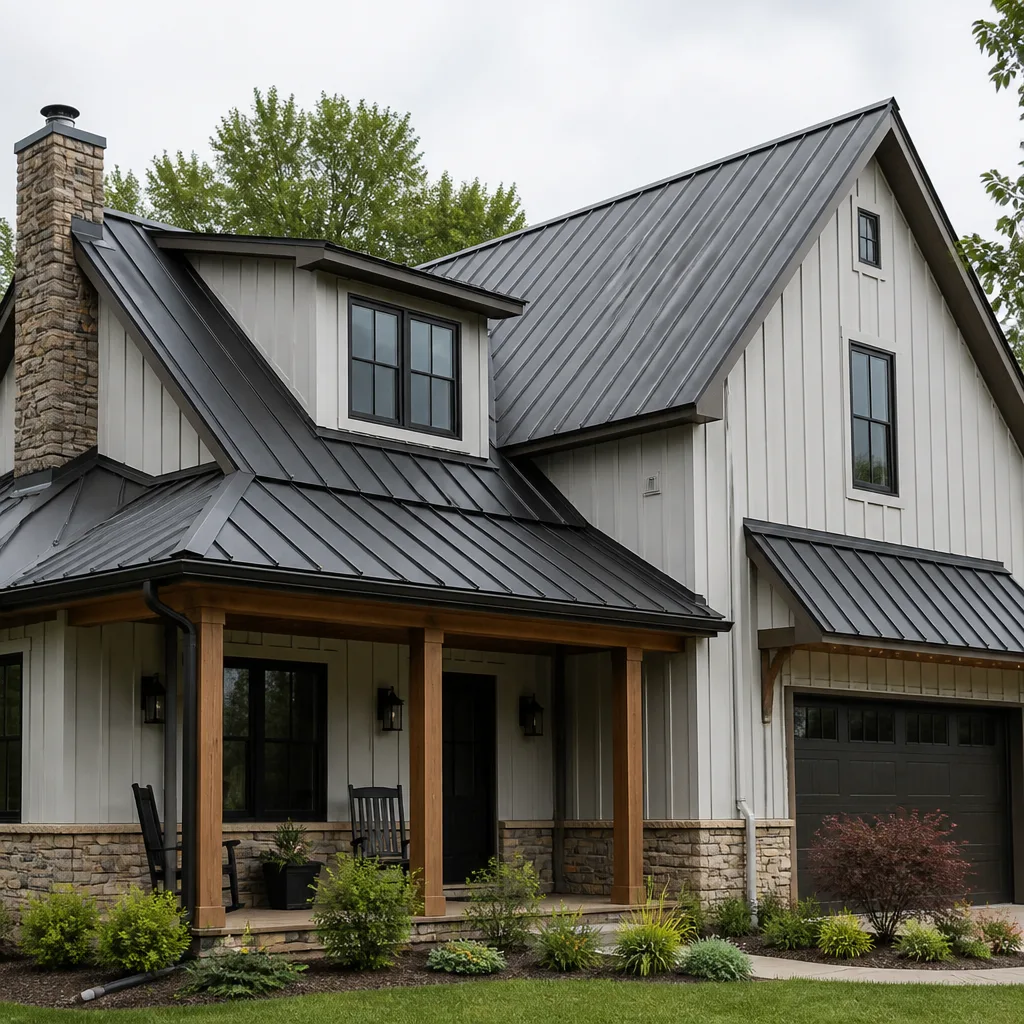 Metal roofing
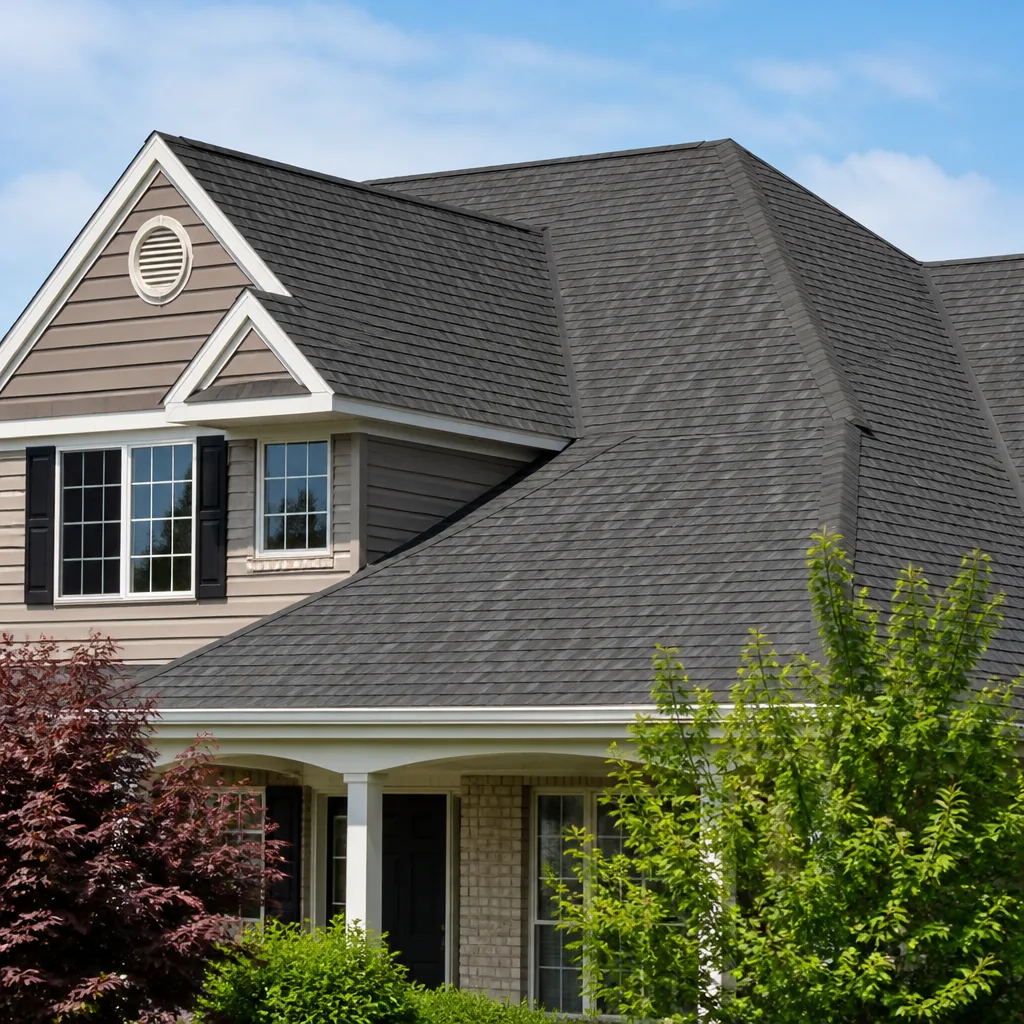 Architectural shingles
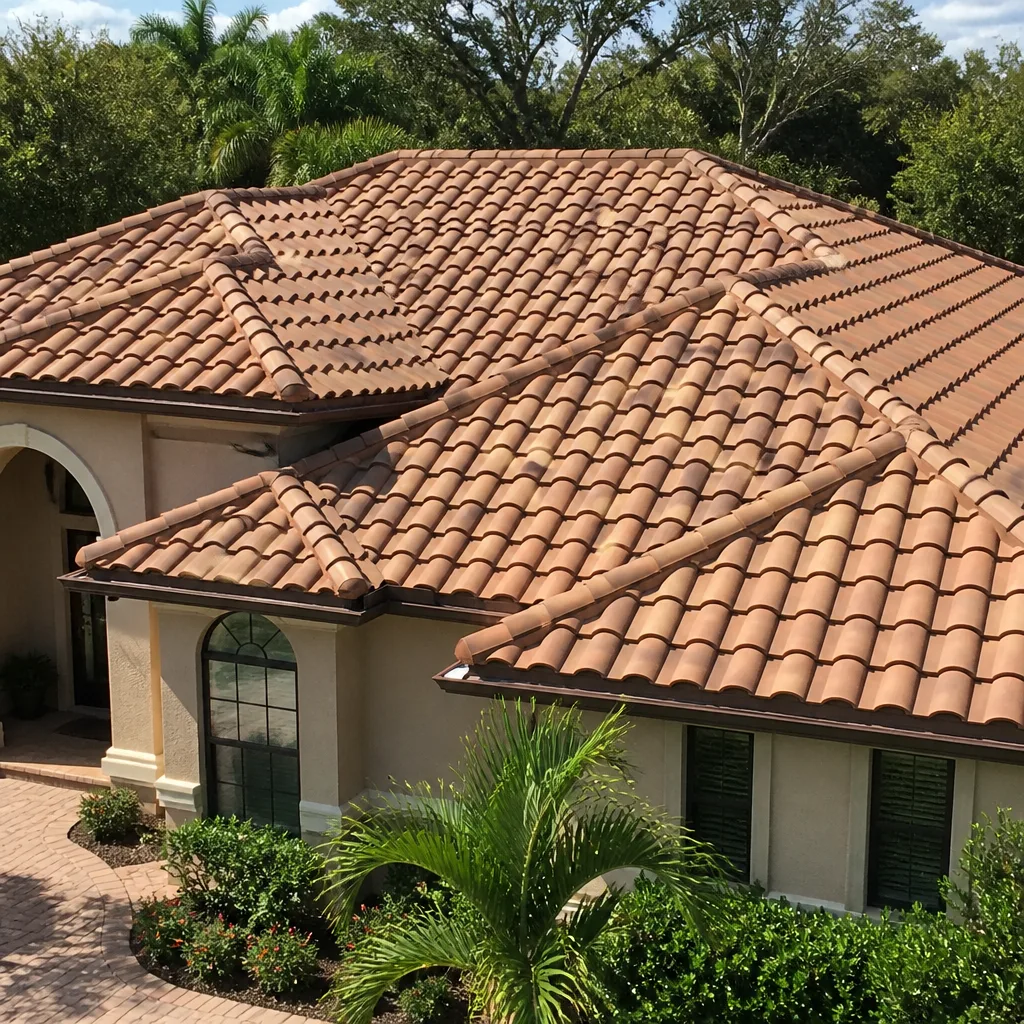 Tile roofing
 GAF
 Owens Corning
 Flat & low-slope
Free roof inspection with deck photos before we talk money - GAF and Owens Corning certified installation
Seasonal Roofing Care for La Habra: Year-Round Homeowner’s Guide
Most “seasonal roofing guides” for Southern California are recycled from national content and tell you to winterize in October. In La Habra, October is when Santa Ana winds peak, which is a completely different problem requiring a completely different set of actions. If you schedule your roof maintenance around a New England calendar, you’ll miss the three stress periods that actually damage roofs in this city: accumulated heat from June through September, wind-driven debris and uplift from October through December, and winter rain intrusion from January through March. This guide — along with our Complete Guide to Roofing in La Habra — lays out exactly what a La Habra homeowner needs to do during each of those periods, and why skipping one specific task per season is what turns a $400 repair into a $18,000 replacement.
Styles & brands we work with
Quick Answer
Seasonal roof care in La Habra means working around three stress periods rather than four seasons: clear debris and inspect flashing before the June-to-September heat wave, tighten fasteners and remove wind-borne debris after Santa Ana events from October through December, and check for lifted tiles, cracked sealant, and clogged valleys before the January-through-March rain window. The single most valuable maintenance task in this climate is a twice-yearly valley and flashing inspection, because those two components fail first under La Habra’s specific combination of UV exposure, wind, and winter moisture.
Table of Contents
- The La Habra Roofing Calendar: Three Stress Periods, Not Four Seasons
- Heat Stress Season (June – September): What Actually Fails on a La Habra Roof
- Santa Ana Wind Season (October – December): Before and After Every Event
- Winter Rain Vulnerability (January – March): The Window That Exposes Every Skipped Task
- How Seasonal Care Differs by Roof Type: Tile, Shingle, and Flat Roofs in La Habra
- The Marine Layer Factor: Ventilation and Decking Problems Specific to La Habra
- The One Task Per Season That Prevents the Most Expensive Repairs
- Common Mistakes to Avoid
- When to Call a Professional
- Frequently Asked Questions
- The Bottom Line
The La Habra Roofing Calendar: Three Stress Periods, Not Four Seasons
National roofing guides assume a freeze-thaw cycle that simply doesn’t exist in La Habra. What this city has instead is a steady accumulation of ultraviolet damage from June through September, a wind season that tests every fastener and flashing joint from October through December, and a rain window from January through March that exploits whatever the first two periods weakened. Each period demands different actions, and doing the right task at the wrong time provides almost no protection. For example, clearing debris from valleys in April is useful, but clearing them in late December, right before the rain window opens, is what actually prevents water backup and interior leaks.
La Habra sits in a microclimate pocket where inland heat from the San Gabriel Valley meets cooler air moving in from the coast. That collision creates temperature swings that flex roofing materials daily during summer and early fall. Thermal expansion and contraction are the underlying cause of most roofing failures in this city, not dramatic storm damage. A roof that survives a decade in this climate without maintenance typically fails at the flashing joints, because sealant degrades under UV exposure and loses adhesion when the materials it bonds to expand and contract. Understanding this means understanding why the seasonal calendar below is structured around stress periods, not arbitrary month-by-month tasks.
The Three Stress Periods at a Glance
- Heat stress period (June – September): Peak UV degradation, thermal flexing, and sealant breakdown. Temperatures on roof surfaces regularly exceed 140°F during the hottest weeks.
- Santa Ana wind period (October – December): Sustained offshore winds that lift tiles, tear shingles, drive debris into valleys, and expose every loose fastener. Wind gusts in La Habra can exceed 50 mph during major events.
- Rain vulnerability period (January – March): The payoff window. Water finds every crack, lifted tile, failed sealant joint, and clogged valley. Most interior leak calls in La Habra happen during these three months.
If you only remember one thing from this guide, remember this: every task you skip in one period becomes a bigger expense in the next. Skipped heat-season inspections become wind-season failures. Skipped wind-season repairs become rain-season interior damage. The chain never breaks.
Heat Stress Season (June – September): What Actually Fails on a La Habra Roof
During a La Habra heat wave, your roof surface isn’t just hot. It’s hot enough to cook an egg, and it stays hot for hours after sunset. Composite shingles, tile underlayment, and especially sealants all break down under this sustained thermal load. The failure mode isn’t dramatic. There’s no loud crack or visible collapse. Instead, sealant loses elasticity and pulls away from flashing, underlayment becomes brittle, and fastener holes widen as materials expand and contract. By September, a roof that was watertight in May may have a dozen small vulnerabilities, none of which are visible from the ground.
What to Check Before and During the Heat Season
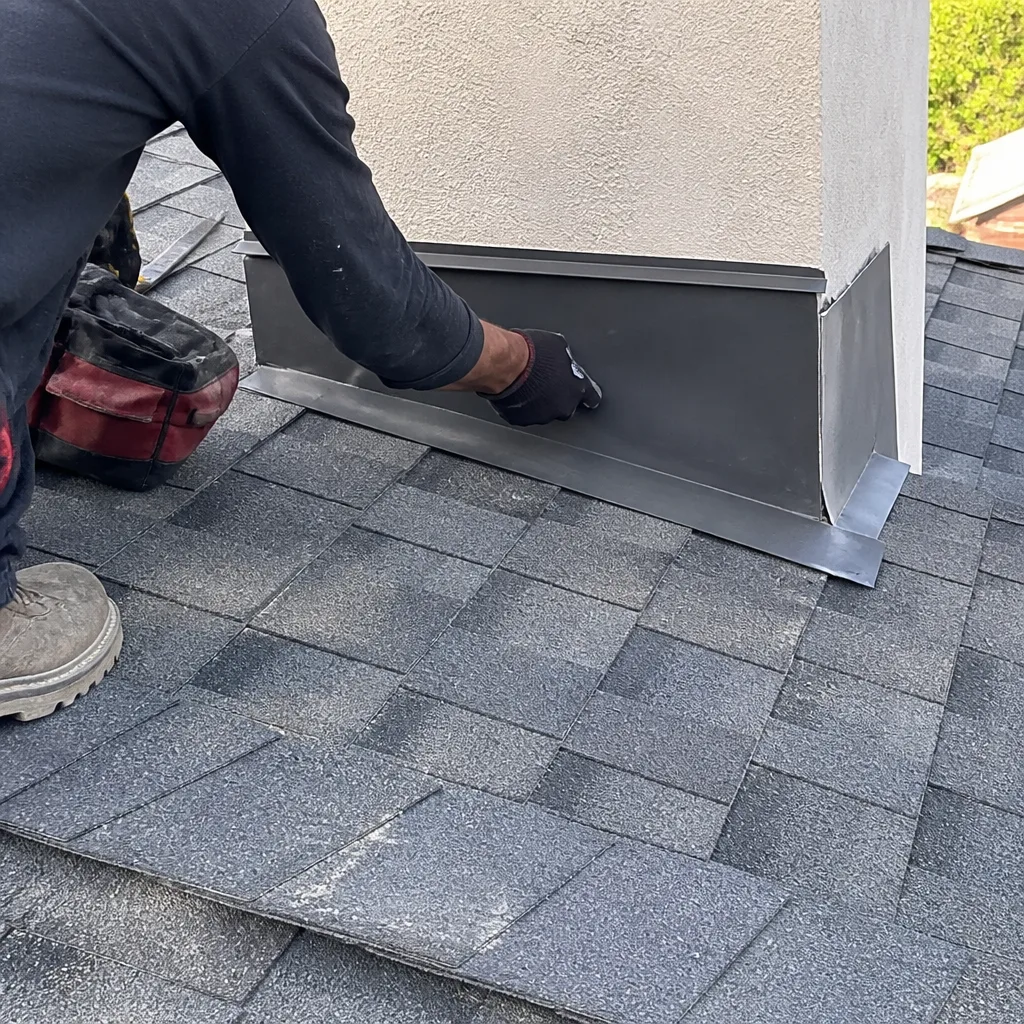
- Inspect flashing sealant at all penetrations. This means vent pipes, chimney bases, skylights, and any roof-to-wall transitions. In our experience, sealant failure at pipe boots is the single most common heat-season defect on La Habra homes.
- Check for shingle granule loss. Composition shingles shed granules as they age, and heat accelerates the process. Look for bald spots or excessive granules in gutters and downspouts. This is a sign the shingle’s UV protection is failing.
- Examine tile for heat-related cracking. Clay and concrete tile expand and contract at different rates than the underlayment beneath them. Hairline cracks that appear in summer widen in fall when Santa Ana winds hit.
- Look for raised nails or fasteners. Thermal cycling pushes nails upward over time. A raised nail head under a shingle creates a water entry point and a tearing hazard during wind events.
- Check attic ventilation. La Habra attics regularly exceed 150°F in summer. Without adequate intake and exhaust ventilation, this heat radiates downward into the living space and accelerates shingle deterioration from below. The marine layer makes this worse, which we cover later in this guide.
Heat-season maintenance is preventative. The goal isn’t to fix dramatic damage; it’s to catch small things before the Santa Ana winds arrive. A $12 tube of roofing sealant applied correctly in August prevents a $600 flashing repair in November. That’s the math that matters in La Habra.
Santa Ana Wind Season (October – December): Before and After Every Event
Santa Ana winds are La Habra’s most destructive roofing force, not because they tear roofs off, but because they exploit every weakness that accumulated during the heat season. Wind gets under lifted shingles, peels back tiles, and rips flashing away from surfaces where the sealant has failed. The winds also drive a specific type of debris into roof valleys: eucalyptus leaves, palm fronds, and dry brush from surrounding foothills. This debris accumulates quickly, and it dams the exact channels needed to move water safely during the winter rain window that follows.
Here’s the counterintuitive part most guides miss: you need to do work before and after every major Santa Ana event, not just in October. A wind event in November can undo what you inspected in October. Treat each major wind event as a trigger for a specific checklist.
Before a Santa Ana Event (October is the right time for this)
- Clear all debris from valleys and scuppers. This is non-negotiable. Debris in a valley is a future water backup. Clear it now, because during the January rains you won’t want to be on the roof.
- Check cap tiles and ridge shingles. These are the first things to lift in high wind. Loose cap tiles become projectiles. Tighten or re-set anything that moves when pushed by hand.
- Inspect all roof penetrations for lifted flashing. Wind gets under flashing edges that have lost sealant adhesion. Press on every flashing piece. If it moves, it needs re-sealing.
- Trim overhanging branches. The goal is to remove anything that can scrape the roof surface during sustained winds. Branches act like saws on shingles and tiles during a 40 mph gust.
After a Santa Ana Event (within 72 hours)
- Walk the property and look for lifted or missing tiles and shingles. You don’t need to climb onto the roof for this. A pair of binoculars from the street or backyard works.
- Check for debris accumulation in valleys again. A single wind event can deposit more debris in 12 hours than the previous three months combined.
- Look for shifted chimney caps or spark arrestors. These are common wind casualties and create a direct water entry point if left loose.
- Check skylight flashing and sealant. Wind flexes skylight frames. Even a few millimeters of movement can crack aged sealant.
We’ve seen more roof failures in La Habra traced back to skipped post-wind inspections than any other single cause. Homeowners assume that because they checked in October, they’re fine through January. But a December wind event can undo an October inspection in a matter of hours. Every major wind event resets the clock.
Winter Rain Vulnerability (January – March): The Window That Exposes Every Skipped Task
La Habra’s rainy season is concentrated, not spread evenly. The city can receive most of its annual rainfall in a handful of storm events between January and March, and those storms arrive after four months of heat damage and three months of wind abuse. This is when roofs actually leak. What surprises many homeowners is that the leak often isn’t caused by the storm itself. The storm is just the first time water had a reason to test the vulnerabilities that already existed.
The most common leak sources we see in La Habra during the rain window are, in order of frequency: failed flashing at roof penetrations, clogged valleys causing water backup, lifted or cracked tiles exposing underlayment, and failed underlayment in aging roofs where the top layer looks fine but the waterproof layer beneath has degraded. The visual condition of a roof’s top surface often has little to do with whether it will leak. Underlayment does the actual waterproofing, and underlayment doesn’t care how good your tiles look.
What to Do Before the Rain Window Opens (Late December / Early January)
- Complete all repairs identified during heat and wind season inspections. If you flagged a lifted flashing in November and didn’t fix it, January will bill you for it with interest.
- Clear valleys one final time. Yes, again. This is the third time this guide has mentioned valley clearing, and that’s because valley clogging is the most preventable cause of winter roof leaks in La Habra.
- Check for water stains on ceilings and walls inside the home. Look specifically in rooms under the roof’s valleys, under skylights, and around chimney chases. Stains can appear weeks after a storm.
- If you have a flat or low-slope roof, check for ponding. La Habra’s winter storms sometimes produce short, intense downpours that overwhelm flat-roof drainage. Standing water after 48 hours indicates a drainage problem that will shorten the roof’s lifespan.
The January-through-March window is not the time to do major roof work in La Habra. It can be done, but scheduling is tighter, weather windows are narrower, and materials move slower. The smart play is to use the rain window as an observation period: watch for leaks, document what you see, and schedule repairs for the early spring dry window. For what to look for, see our Complete Roof Repair Guide for La Habra Homeowners.
How Seasonal Care Differs by Roof Type: Tile, Shingle, and Flat Roofs in La Habra
La Habra’s housing stock includes a high percentage of Spanish-style homes with clay or concrete tile roofs, a significant portion of mid-century homes with composition shingle roofs, and a smaller but important segment of flat or low-slope roofs on homes built in the 1960s and 1970s. Each type responds differently to the three stress periods, and a seasonal care routine that works for one can damage another.
Tile Roofs (Clay and Concrete)
Tile is the most durable top surface used on La Habra homes, but it’s also the most misunderstood. Tile itself rarely fails. What fails is the underlayment beneath the tile, which has a lifespan of 20 to 30 years regardless of how good the tile above it looks. Many La Habra homeowners assume their 40-year-old tile roof is fine because the tile is intact, while the felt or synthetic underlayment beneath it has been silently failing for a decade. Seasonal care for tile focuses on the things that protect the underlayment:
- Heat season: Check for cracked or shifted tiles that expose underlayment to UV. Underlayment isn’t designed for direct sun exposure.
- Wind season: After every major Santa Ana event, look for lifted or displaced tiles. A displaced tile creates a path for wind-driven rain to reach the underlayment directly.
- Rain season: Watch for ceiling stains. Tile roofs leak slowly, and the first sign is often a water stain that appears days or weeks after a storm, not a visible drip.
Composition Shingle Roofs
Shingle roofs are more vulnerable to heat and wind than tile, but they’re also easier and less expensive to repair. The failure pattern in La Habra is predictable: heat degrades the shingle’s UV protection, wind lifts edges and tears off granules, and rain finds the resulting bald spots and lifted corners. Seasonal care for shingles is more frequent than for tile:
- Heat season: Check for granule loss, curling edges, and raised nail heads. Address these before wind season.
- Wind season: After each major wind event, look for missing or lifted shingles. Shingles don’t fail gradually; they tear off all at once.
- Rain season: Check attic spaces for moisture after storms. Shingle leaks often show up in the attic before they show up on the ceiling.
Flat and Low-Slope Roofs
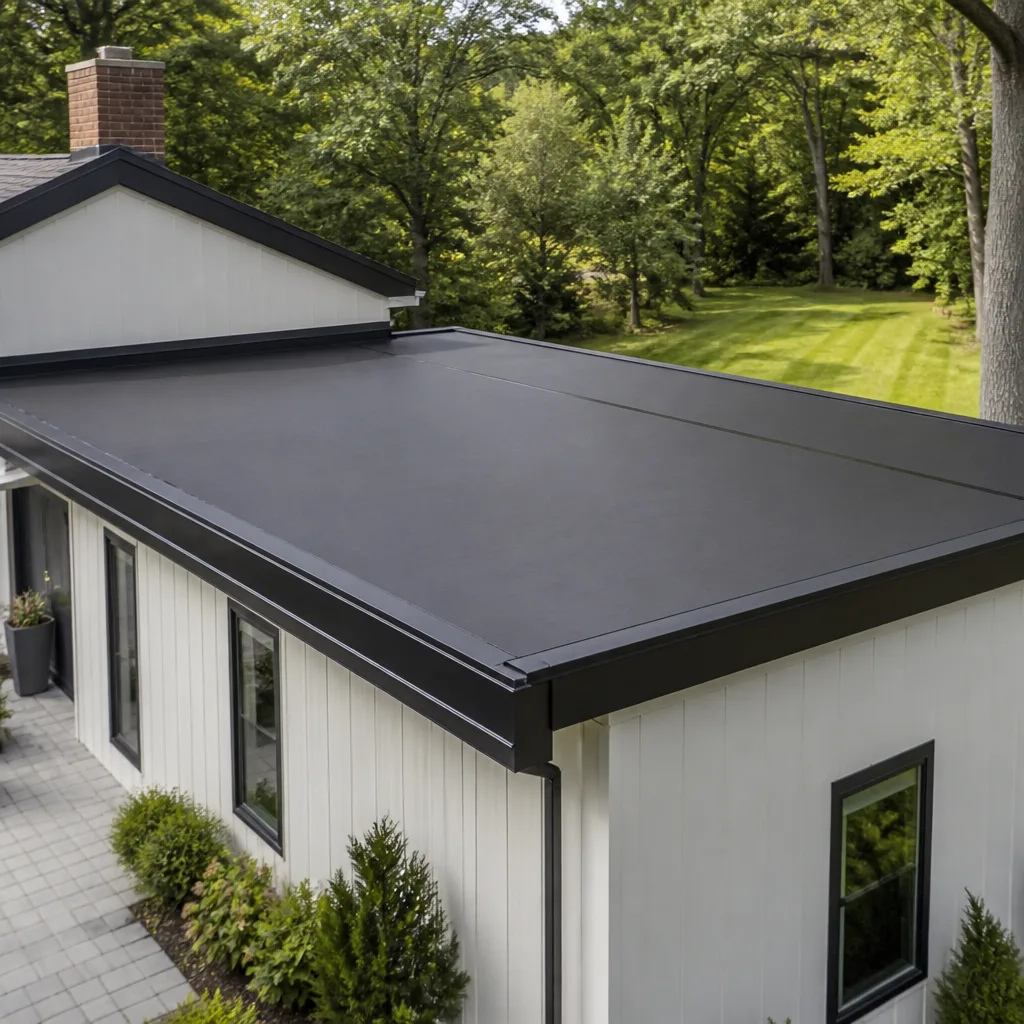
Flat roofs are the most vulnerable of the three types during La Habra’s rain window because they rely on drainage rather than slope to move water. Ponding is the enemy. Heat season worsens flat roofs by degrading the membrane, and Santa Ana winds can tear poorly adhered membrane edges. But the real seasonal danger is the rain window, when even a small drainage blockage creates standing water that finds its way through any imperfection in the membrane. Seasonal care for flat roofs includes:
- Heat season: Check for membrane bubbles, cracks, and shrinkage at seams.
- Wind season: Inspect all membrane edges and flashing points after major wind events.
- Rain season: After every significant storm, check for ponding and clear any debris from drains and scuppers.
One note that applies to all three types: La Habra homes built before 1980 may have roofing materials that can’t be matched by modern equivalents. When we handle repairs on these older homes, we source through our multi-brand material lineup — including GAF, CertainTeed, Owens Corning, IKO, Atlas, Tamko, and Boral — to find products that match the existing system. See Choosing the Right Roofing Brand: A Buyer’s Guide for La Habra for help navigating these options. The goal is a repair that blends with what’s already on the roof, not a mismatched patch.
The Marine Layer Factor: Ventilation and Decking Problems Specific to La Habra
La Habra sits close enough to the coast that the marine layer reaches the city on many summer mornings, usually burning off by midday. This pattern creates a roofing problem that doesn’t appear in most seasonal guides: condensation. When moist marine air moves into a hot attic space in the early morning, it condenses on the underside of the roof decking. Then the midday heat evaporates that moisture, raising the attic’s humidity level dramatically. Over months and years, this cycle creates the perfect conditions for wood decking deterioration and mold growth, especially in homes with marginal attic ventilation.
Here’s the La Habra-specific chain: marine layer provides moisture, summer heat provides the temperature gradient, and poor ventilation traps the resulting humidity. Homes with powered attic fans or passive ridge-and-soffit ventilation fare better. Homes with sealed soffits, under-sized vents, or blocked intake paths are the ones we find with rotted decking during Roof Replacement in La Habra projects. The visible roof looks fine. The decking beneath is compromised.
What This Means for Seasonal Care
- Check attic ventilation during heat season. Specifically, check that intake vents (soffit or eave vents) are not blocked by insulation or debris. Blocked intake vents defeat the entire passive ventilation system.
- Look for moisture staining on the underside of roof decking. If you can access your attic, look at the decking specifically in the morning during marine layer season. Dark staining or visible mold means the condensation cycle is active.
- Check for rust on exposed fasteners. The marine layer accelerates corrosion on metal components. Rusted fasteners are a warning sign that other metal components may be degrading too.
This is one area where Roof Inspection in La Habra from a professional can reveal things an attic walk-through misses. We’ve used thermal imaging on many La Habra homes to identify moisture trapped in decking that wasn’t visible to the naked eye. The marine layer effect is real, and it’s one of the most overlooked factors in local roof deterioration.
The One Task Per Season That Prevents the Most Expensive Repairs
If you’re going to do the minimum, do these four things. Each one prevents more repair cost than any other task in its season, and skipping any one of them is how small problems become full replacements. This is the list we share with homeowners during Roof Repair in La Habra consultations who want to stay ahead of major expenses.
Heat Season (June – September): Inspect and Re-Seal Flashing at All Penetrations
Every pipe boot, chimney flashing, skylight frame, and roof-to-wall transition relies on sealant to stay watertight. Heat season degrades sealant. Inspecting and re-sealing flashings during summer costs a fraction of what water damage repair costs in winter. This single task catches the most common roof leak source before it becomes a problem.
Wind Season (October – December): Clear Valleys After Each Major Event
Valleys move more water than any other part of a roof. Wind season fills them with debris. Clearing valleys before and after Santa Ana events ensures that when the rain window opens, water has a clear path off the roof. A clogged valley is not just an inconvenience; it’s a guarantee that water will back up under shingles or tiles and find a way inside.
Rain Season (January – March): Check Interior Ceilings and Attic Spaces Monthly
You can’t always prevent a leak, but you can catch one early. Monthly interior checks during the rain window identify small leaks before they cause widespread damage. A water stain the size of a quarter becomes a water stain the size of a dinner plate if left unchecked for six weeks. Documentation also helps, because insurance claims and warranty claims are stronger when you can prove when a leak first appeared.
Spring (April – May): Schedule a Professional Inspection
The period after the rain window and before the heat season is the best time for a thorough roof assessment in La Habra. The weather is mild, roof surfaces are accessible, and any winter damage is still recent enough to document. A professional inspection at this time catches everything the previous three stress periods damaged, and gives you a full dry season to complete repairs before the cycle starts again.
Common Mistakes to Avoid
- Following a national seasonal checklist. Tasks designed for freeze-thaw climates waste time in La Habra. Clearing snow from roof edges isn’t a thing here, and skipping wind-event-specific checks because they’re not on the generic list is a real mistake.
- Assuming tile means maintenance-free. Tile roofs still need underlayment replacement every two to three decades, and tile still requires inspection after major wind events. The tile itself is durable; the system beneath it is not.
- Clearing valleys in spring and never again. Debris accumulation peaks during Santa Ana season, not spring. One spring clearing doesn’t protect you through the winter.
- Ignoring the attic. Many La Habra roofing problems are first visible from inside the attic, not on the roof surface. Homeowners who never enter their attics miss the earliest warning signs.
- Using the wrong sealant or patch material. Not every roofing material works with every sealant. Using asphalt-based products on modified bitumen, or silicone on tar-based systems, creates bonding failures that look fixed but aren’t.
- Waiting until the rain window to schedule repairs. Contractors in La Habra are busiest during January and February. Scheduling repairs during the dry season gets better availability and better pricing.
- Assuming a roof that looks fine is fine. The top surface of a roof hides the condition of the underlayment and decking beneath. A roof that looks intact can be one winter storm away from a leak.
When to Call a Professional
Some roofing tasks are safe and reasonable for a homeowner with a ladder and basic tools. Inspecting from the ground with binoculars, clearing gutters from an extension ladder, and checking interior ceilings for stains all fall into that category. Other situations call for professional help, specifically: any time you’d need to walk on the roof surface, any time you see visible water intrusion, any time a wind event has displaced multiple tiles or shingles, any time you find water staining in the attic, and any time you’re unsure whether a crack or gap is cosmetic or structural. Working on a roof is dangerous, and the risk increases with age, pitch, and material type. Dauntless Roof Repair offers free estimates in La Habra – call (844) 750-0317 if you’ve spotted something you want checked by someone who sees these problems every day.
We built this company around a simple approach: tell homeowners exactly what their roof needs and exactly what it doesn’t. If a repair will solve the problem, we’ll say so. If replacement is the honest answer, we’ll tell you that too. At Dauntless, we don’t walk away from hard roofing problems, and we don’t manufacture them where they don’t exist.
Frequently Asked Questions
Seasonal roof maintenance in La Habra typically costs between $200 and $600 for cleaning, debris removal, and minor sealant work, depending on roof size and accessibility. Repairs identified during maintenance are priced separately. Call (844) 750-0317 for a free estimate tailored to your specific roof type and condition.
We recommend a professional roof inspection once per year in La Habra, ideally in spring after the rain window closes but before the heat season begins. Homes along La Habra’s foothill edges that see more wind damage may benefit from a second inspection after the Santa Ana season. A yearly inspection catches the cumulative damage from all three stress periods before it becomes a repair.
Yes, Santa Ana winds cause more roofing damage in La Habra than any other weather event, primarily by exploiting existing weaknesses. Lifted flashing, loose cap tiles, and degraded sealant that survived summer heat become failures when sustained winds get under them. The damage often isn’t visible until the winter rain window reveals the leaks.
Failed flashing at roof penetrations is the most common problem we find on La Habra roofs, and it’s directly tied to the city’s heat and wind cycles. Sealant degrades under UV exposure, thermal cycling widens the gaps, and wind gets under the flashing edges. It’s a small problem that causes large interior damage when rain arrives.
A tile roof needs less surface maintenance than shingles, but it still needs attention. The underlayment beneath the tile is the actual waterproof layer, and it degrades over time regardless of the tile’s appearance. Seasonal checks should focus on displaced tiles, cracked tiles that expose underlayment, and the condition of flashings at all penetrations.
Ground-level and attic inspections are reasonable homeowner tasks, but walking on a roof is dangerous and can damage certain roofing materials. Tile and steep-pitch roofs are especially risky. We recommend homeowners handle visual inspections from the ground and leave on-roof work to professionals with the right training and safety equipment. Call (844) 750-0317 if you want a free professional assessment.
The Bottom Line
La Habra doesn’t follow a standard seasonal roofing calendar, and homeowners who apply generic national advice miss the specific stress periods that damage roofs in this city. Heat accumulation from June through September degrades sealants and accelerates material breakdown. Santa Ana winds from October through December exploit those weaknesses and fill valleys with debris. Winter rains from January through March reveal every skipped task as interior damage. The pattern is predictable, which means the maintenance schedule can be too. Clear valleys before the rain window, inspect flashings before the heat season, check for wind damage after every major Santa Ana event, and get an annual professional inspection each spring. Those four habits, applied consistently, are what separate a La Habra roof that lasts twenty-five years from one that fails at fifteen. For more guides & resources tailored to this city, visit our blog.
If you need a professional assessment, we’re here. Call (844) 750-0317 to schedule a free roof estimate in La Habra. We’ll tell you exactly what your roof needs, and exactly what it doesn’t.
Written by the team at Dauntless Roof Repair, serving La Habra since 2017.
See the difference
 Before
 After
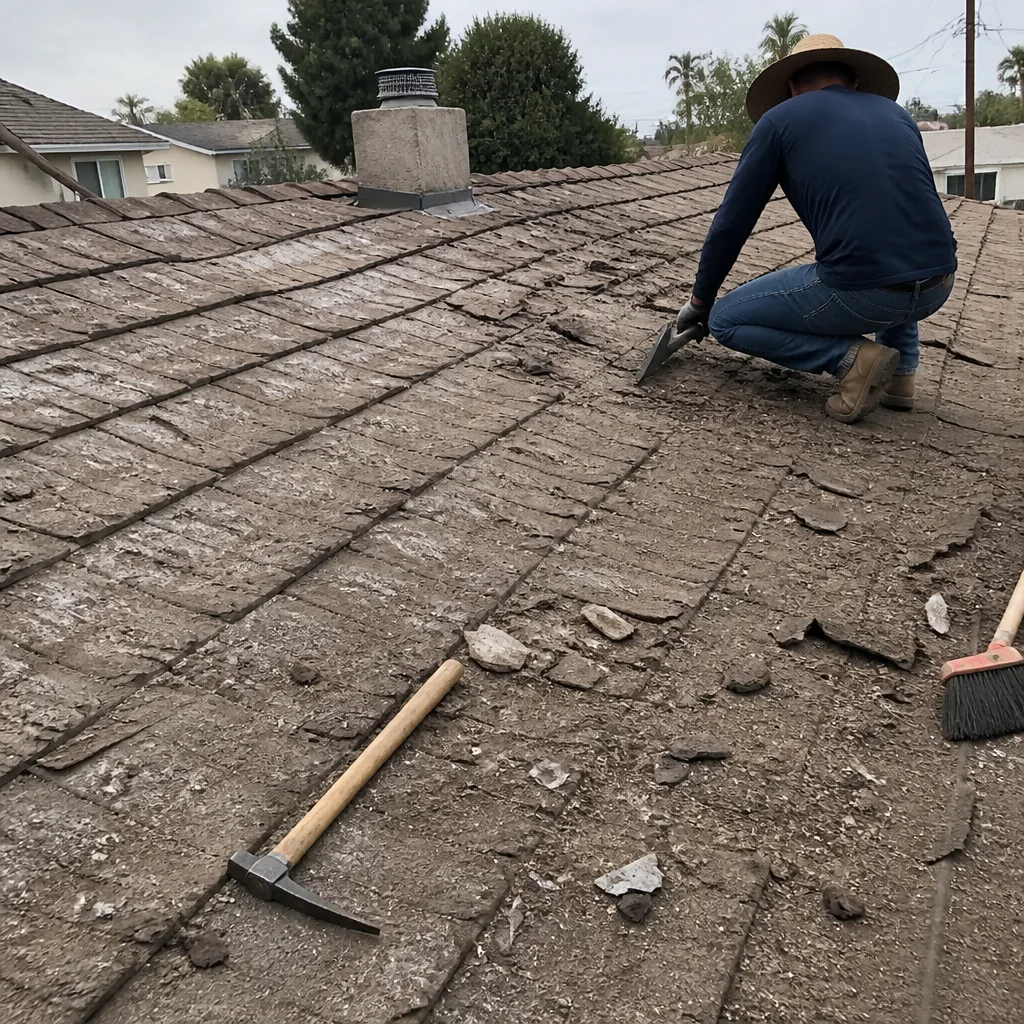 Before
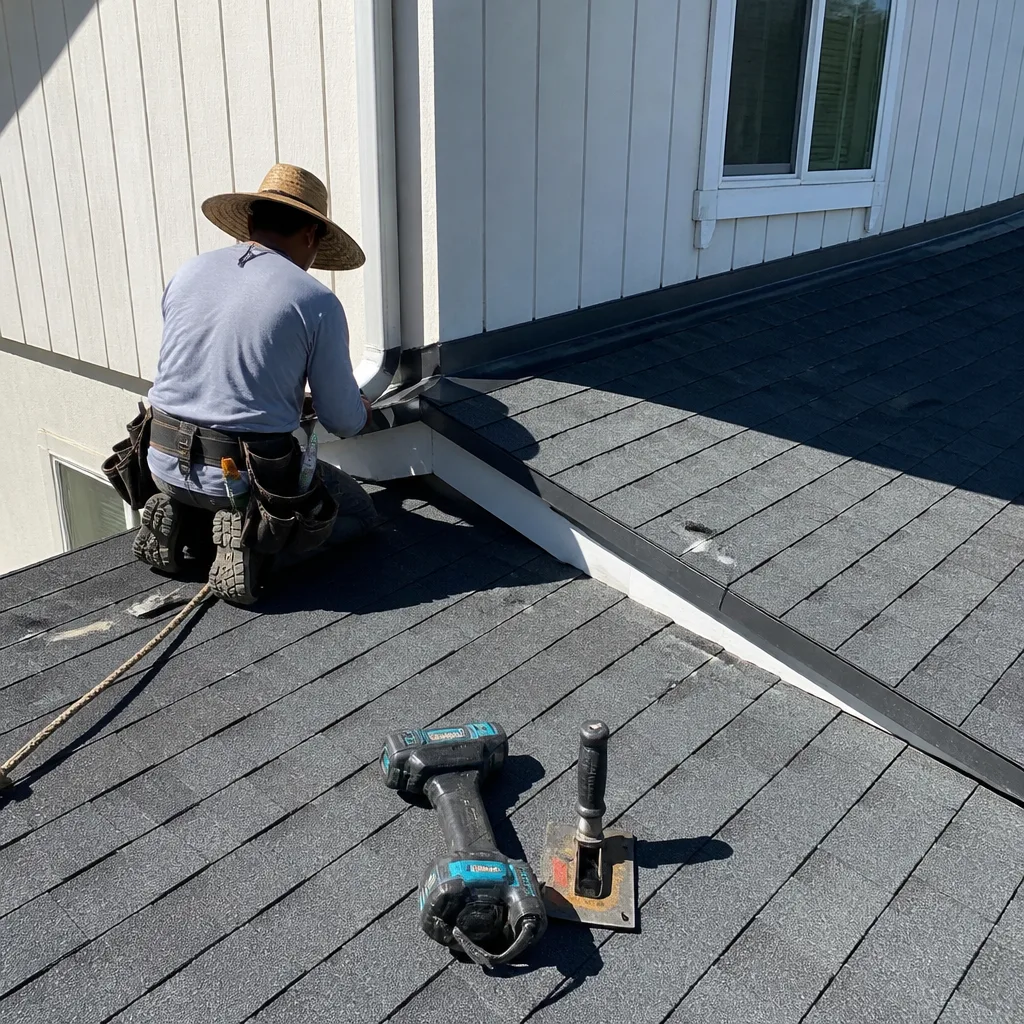 After
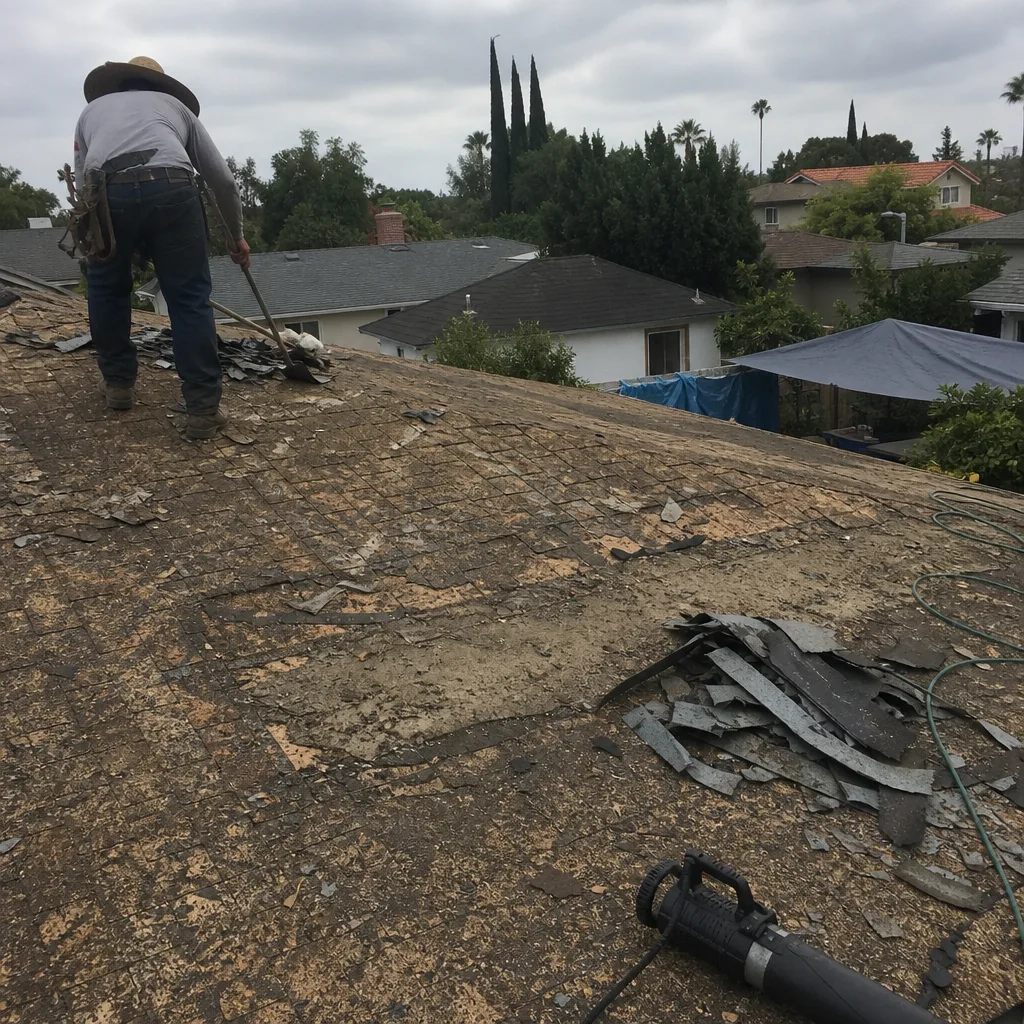 Before
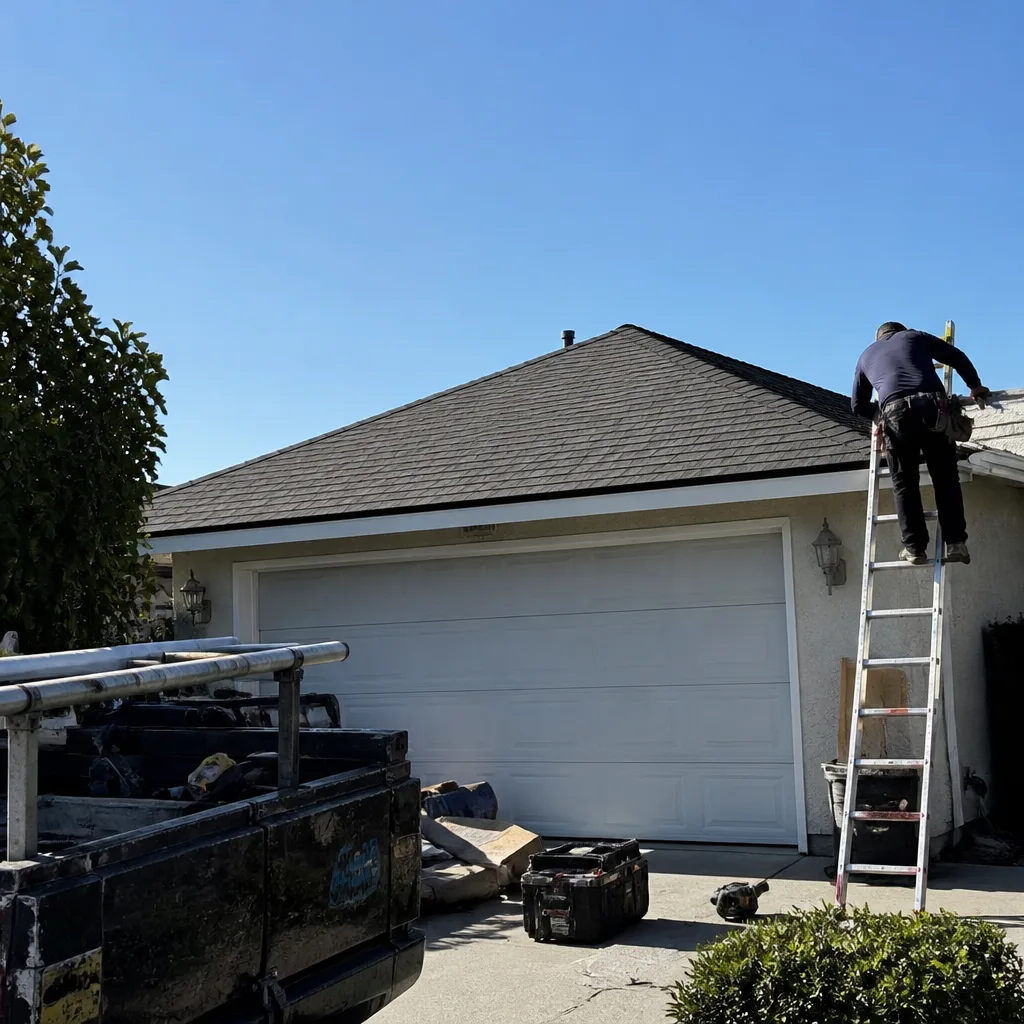 After