Last updated October 31, 2026
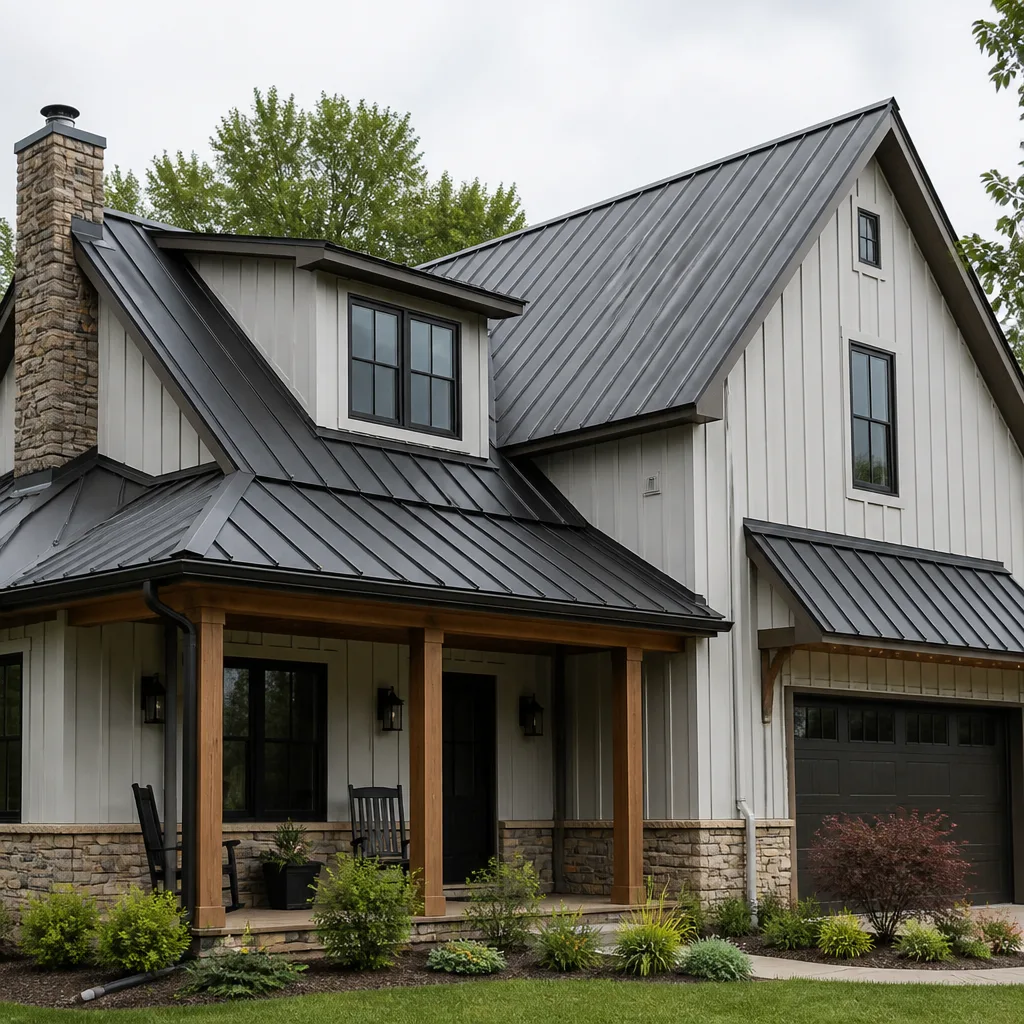 Metal roofing
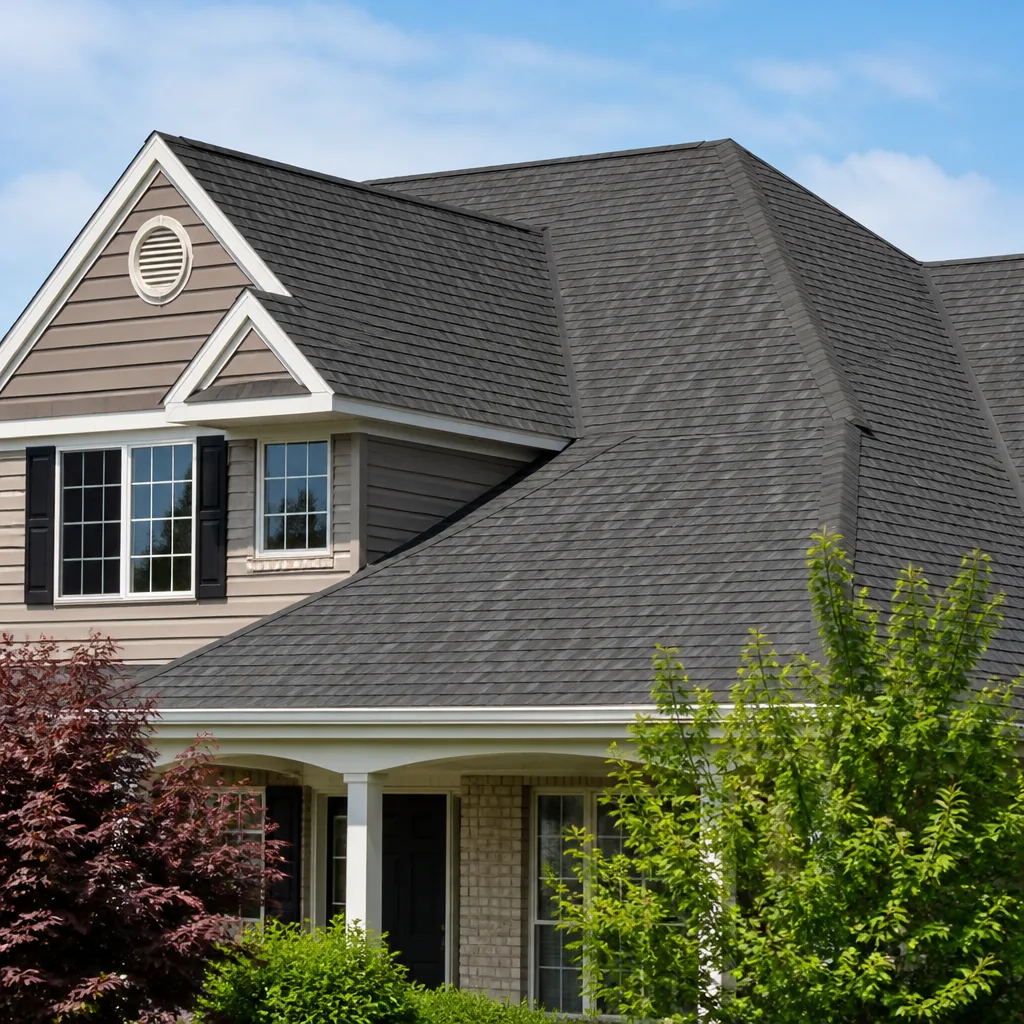 Architectural shingles
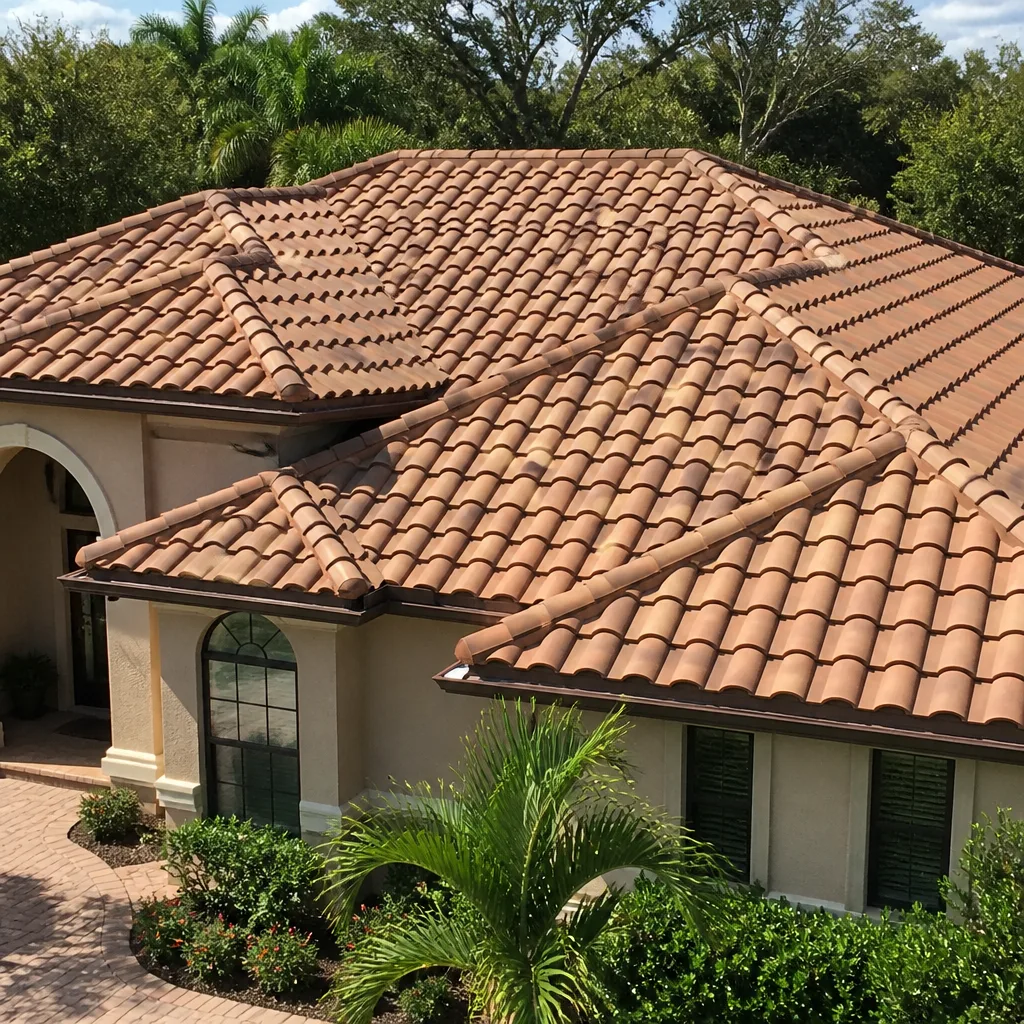 Tile roofing
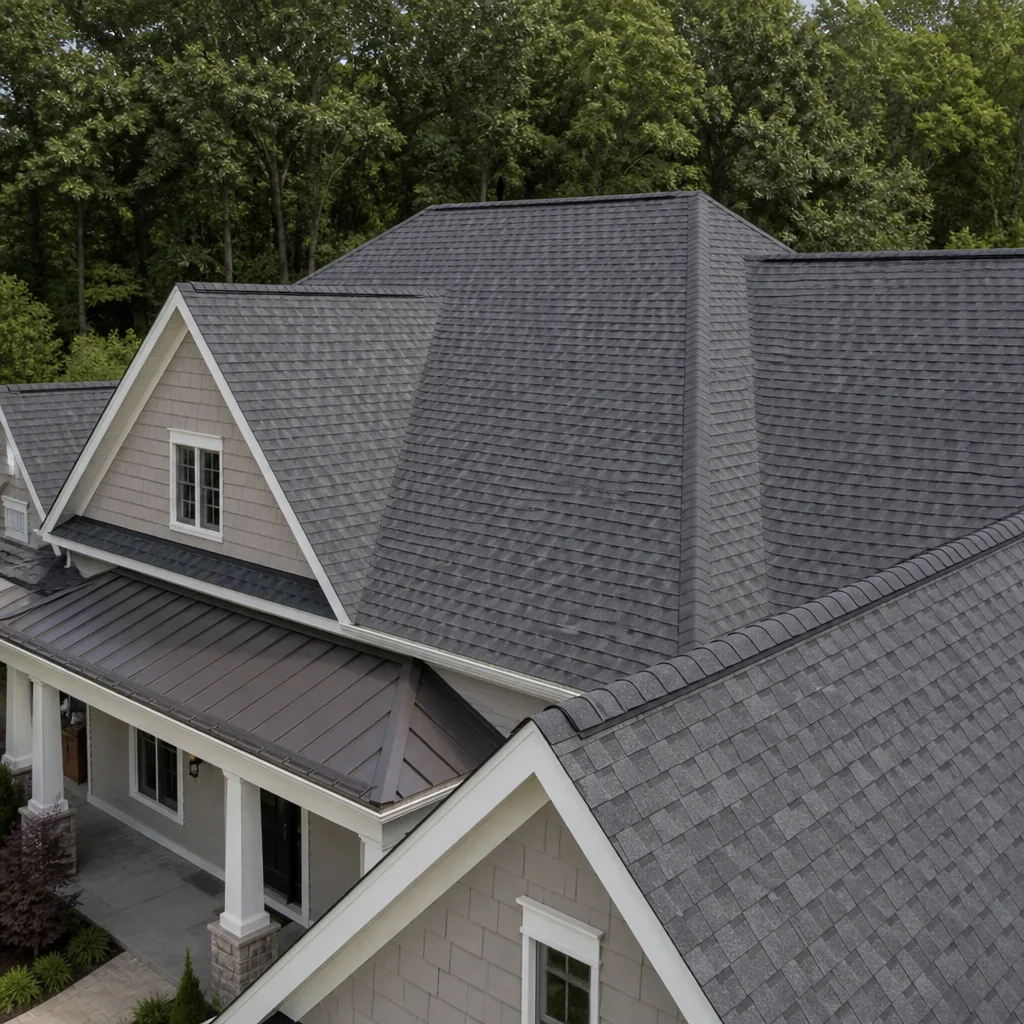 GAF
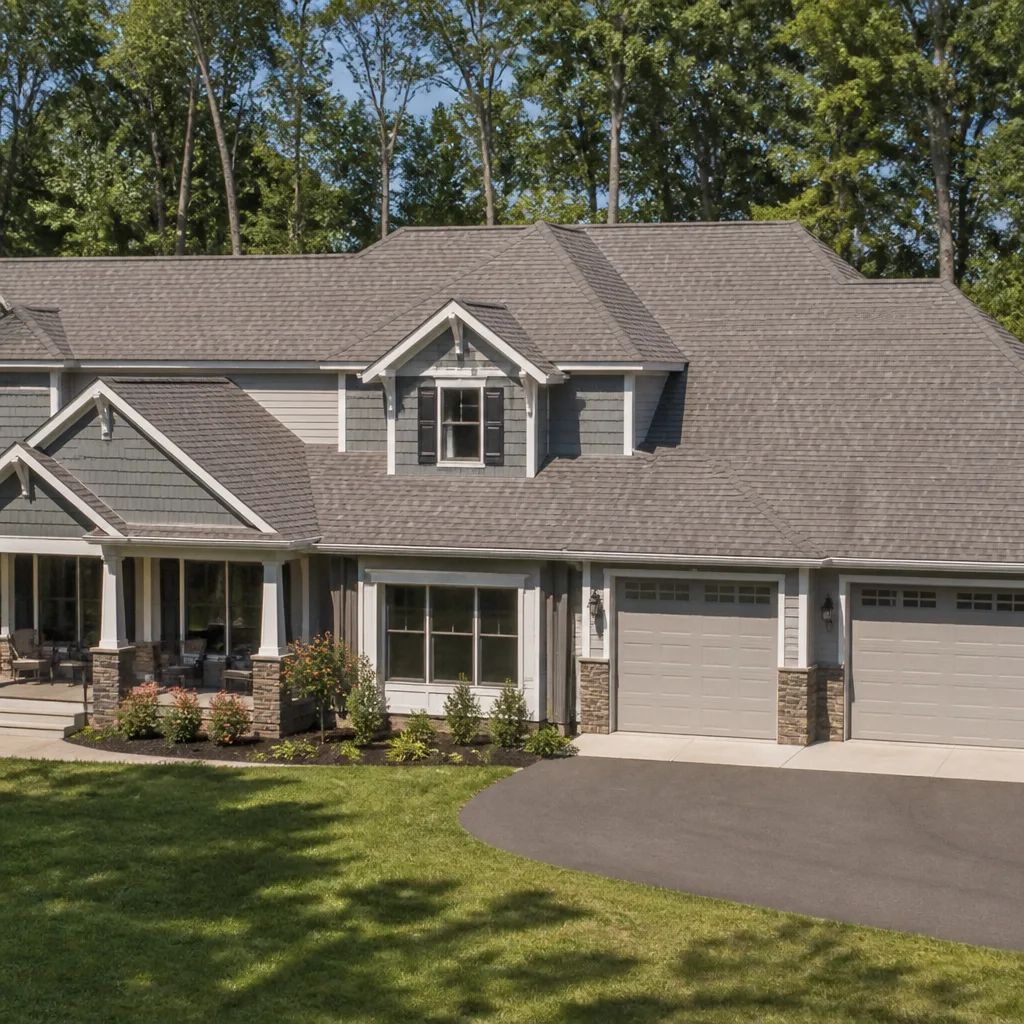 Owens Corning
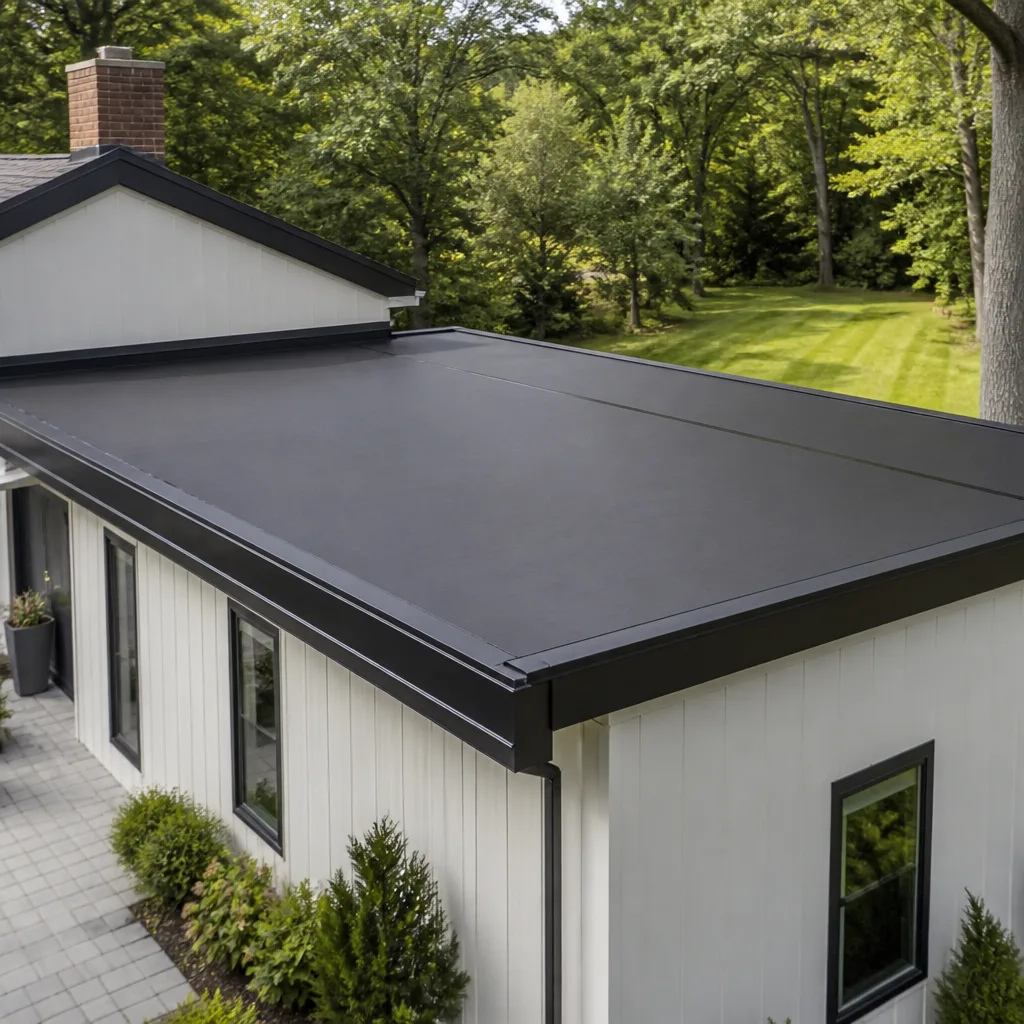 Flat & low-slope
Free roof inspection with deck photos before we talk money - GAF and Owens Corning certified installation
Roofing Permits, Codes & Inspections in CA: What You Need to Know
Here’s a stat that catches most California homeowners off guard: under the state’s building code, replacing more than 10% of your roof’s surface within a 12-month period can trigger a Title 24 cool-roof compliance requirement. That means a “simple re-roof” you thought was just swapping shingles can suddenly require documentation, specific material choices, and an inspection you never budgeted for. In La Habra, where summer rooftop temperatures routinely push past 150 degrees on dark asphalt shingles, the rule isn’t bureaucratic trivia – it’s the difference between a roof that passes inspection and one that gets red-tagged. This guide walks through exactly when you need a permit, what inspectors check for, what the La Habra-specific process looks like, and how to avoid the mistakes that turn a straightforward roofing job into an expensive correction. For Roofing Warning Signs: A La Habra Homeowner’s Reference Guide, see our earlier breakdown.
Styles & brands we work with
Quick Answer
Most roof replacements and any structural roof repairs in California require a building permit, and re-roofing projects that exceed 10% of the roof’s surface within a 12-month period must meet Title 24 cool-roof standards unless an exception applies. In La Habra, permit applications go through the city’s Building Division, with typical re-roof permits running between $200 and $450 depending on project valuation, and inspections are scheduled once the old roofing is stripped and again at completion. Skipping the permit isn’t a money-saver – it can void your homeowner’s insurance coverage on the roof, complicate a future home sale, and cost more in retroactive permit fees than the original permit would have.
Table of Contents
- When a Roofing Permit Is Required in California
- Title 24 Cool-Roof Requirements: What Actually Applies
- The California Building Code Sections That Govern Your Roof
- The La Habra Permit Process: Fees, Timeline, and What to Expect
- What a Roofing Inspection Actually Checks – and What Gets Flagged
- HOA vs. Municipal Permits: When You Need Both
- Common Mistakes to Avoid
- When to Call a Professional
- Frequently Asked Questions
- The Bottom Line
When a Roofing Permit Is Required in California
California law draws a line between “repair” and “re-roofing,” and that line determines whether you need a permit. The short version: if you’re fixing isolated damage – replacing a few missing shingles after a windstorm, patching a small leak around a vent – you generally don’t need a permit. But if you’re replacing the roof’s weatherproofing layer, you do.
The trigger for a permit under the California Residential Code and the California Building Code is straightforward: any project that involves removing more than 50% of the roof sheathing, any structural modification to roof framing, or any re-roofing that changes the roof’s profile or dead load requires a permit. Additionally, many municipalities – La Habra included – require permits for any complete roof replacement, regardless of sheathing scope.
Here’s what typically requires a permit in La Habra:
- Full roof replacement – tearing off the old shingles or tiles and installing a new roofing system, even if the sheathing underneath is intact.
- Re-roofing over an existing layer – some jurisdictions allow a second layer over one existing layer; you still need a permit, and the inspector will verify the existing layer is sound.
- Structural repairs – anything involving rafters, trusses, or sheathing replacement beyond a small patch.
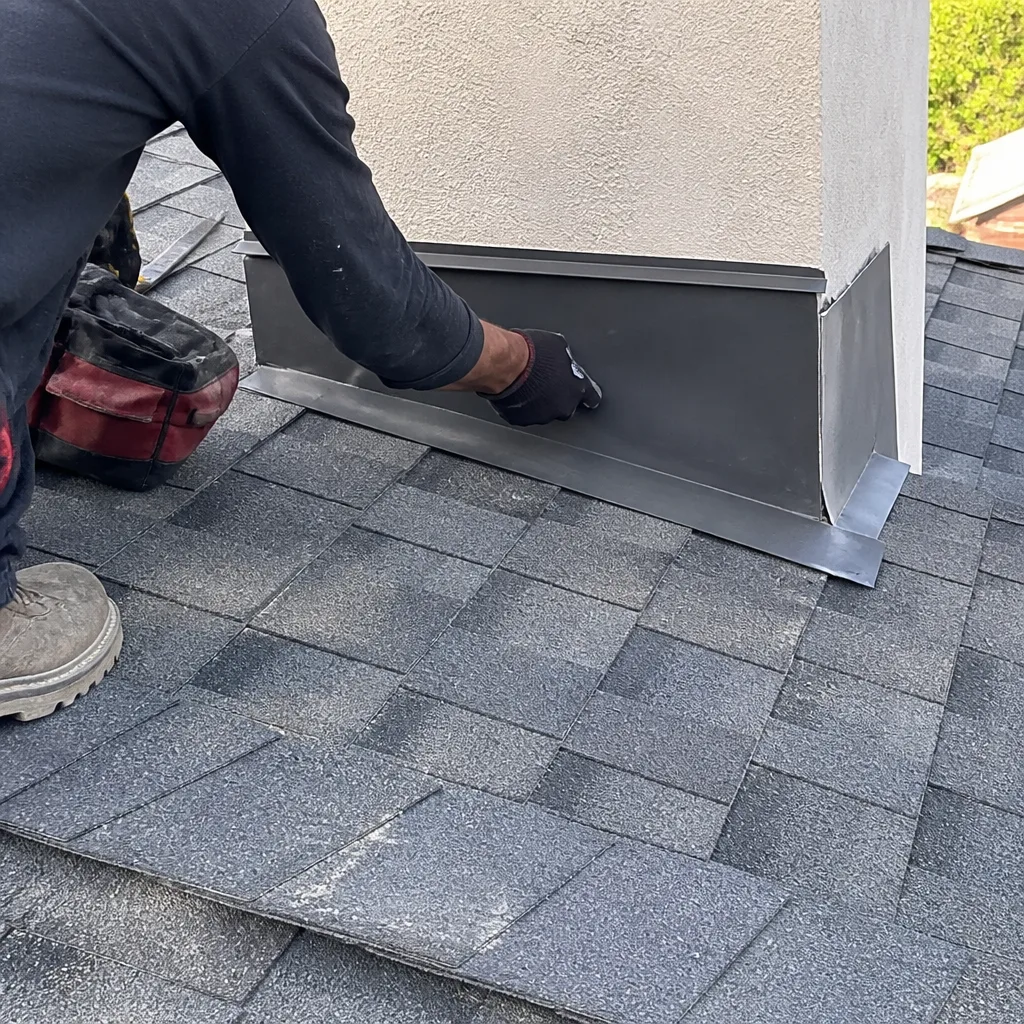
- Chimney re-flashing or skylight installation – when the work penetrates the roof deck, the permit requirement kicks in.
- Solar panel mounting – even if a separate electrical permit is pulled, the roofing penetration and load path must be reviewed.
What most homeowners don’t realize is that “repair” has a numerical threshold too. In practice, if you’re replacing more than roughly 100 square feet of roofing material – which is about the size of a single steep-slope section – the city will treat it as re-roofing, not repair. In La Habra’s climate, where Santa Ana winds routinely strip shingles in concentrated patches, we’ve helped plenty of homeowners who thought they had a simple repair on their hands and turned out to have a much larger tear-off.
A quick note on our philosophy at Dauntless Roof Repair home: we’ll tell you exactly what your roof needs – and exactly what it doesn’t. If a job can be done as a repair without a permit, we’ll tell you. If it crosses into re-roofing territory, we’ll tell you that too, and we’ll walk you through the permit process before we start.
Title 24 Cool-Roof Requirements: What Actually Applies
California’s Title 24 energy code is where most re-roofing surprises live. The rule that catches homeowners is buried in the California Energy Commission’s Building Energy Efficiency Standards: when you replace or install roofing on a low-slope or steep-slope roof, the new material must meet minimum reflectivity and thermal emittance values unless you qualify for an exception.
Here’s the breakdown, in plain terms:
- Low-slope roofs (less than 2:12 pitch): new roofing materials must have a minimum 3-year aged solar reflectance of 0.55 and a thermal emittance of 0.75, or a Solar Reflectance Index (SRI) of 64 or higher.
- Steep-slope roofs (2:12 pitch or steeper): materials must meet a minimum 3-year aged solar reflectance of 0.20 and a thermal emittance of 0.75, or an SRI of 16 or higher.
- The 10% rule: if you’re replacing less than 10% of the roof’s surface area in a 12-month period (and less than 500 square feet total), Title 24 compliance may not apply. This is the “repair” carve-out.
The material implication is real: not every shingle color or tile profile qualifies. A dark charcoal asphalt shingle from one manufacturer may meet the reflectance minimum because of its granule coating, while a similarly dark product from another brand fails. This is why we keep seven brand lines available – GAF, CertainTeed, Owens Corning, IKO, Atlas, Tamko, and Boral – because the right choice depends on what the energy code will accept, not what’s sitting on a warehouse shelf. Our Choosing the Right Roofing Brand: A Buyer’s Guide for La Habra explains how we match homeowners to the right manufacturer.
In La Habra specifically, the practical effect of Title 24 is that you’ll need documentation. The city asks for the manufacturer’s Cool Roof Rating Council (CRRC) listed values for the material you’re installing. If your roofer hands you a quote that doesn’t mention reflectivity, emissivity, or SRI, they’re skipping a step that the inspector will catch. We’ve seen it happen: a homeowner signs a contract, the old roof comes off, and the inspector asks for the CRRC rating sheet for the shingle they just nailed down. If the material doesn’t qualify, the job stops until it’s corrected.
There are exceptions – raftered roofs with a ventilated attic space above the ceiling insulation may be exempt in some configurations, as are certain historic buildings – but they’re narrow. Don’t assume you qualify; confirm it in writing before you commit.
The California Building Code Sections That Govern Your Roof
If you want to read the actual rules, the relevant sections are in the California Building Code (CBC) and the California Residential Code (CRC). These are the ones that come up over and over in La Habra roofing jobs:
CBC Chapter 15 – Roof Assemblies and Rooftop Structures: This is the core roofing chapter. It sets the minimum requirements for roof covering materials, underlayment, flashing, and drainage. Section 1511 covers re-roofing specifically, including the requirement that existing roof coverings be removed before new roofing is applied unless the roof structure is designed to support the additional dead load.
CBC Section 1511.3 – Re-roofing: This is the section that gets quoted most often in permit rejections. It says you can install a new roof covering over an existing one only if the roof structure can handle the added weight and the existing roof is still providing adequate drainage. In practice, most La Habra inspectors will approve a second layer over one existing layer, but not over two – and never over a layer that’s already failing.
CRC Section R908 – Roof Assemblies in One- and Two-Family Dwellings: The residential code mirrors the CBC but with requirements tailored to houses. R908.3 requires that where a new roof is installed over an existing roof, the new roof must not exceed the maximum number of layers allowed by the manufacturer, and the existing roof must be inspected for soundness.
CBC Section 1510 – Rooftop Structures: This governs penetrations – vents, pipes, skylights, and the curbs they sit on. Many La Habra roof leaks are actually flashing failures around penetrations, which is something a good Roof Inspection in La Habra will evaluate before you ever get to permit questions.
Fire classification requirements: In wildfire-urban interface zones and in most California cities, roof coverings must have a Class A fire rating. La Habra’s building code adopts this requirement. Most quality asphalt shingles from brands like GAF, CertainTeed, and Owens Corning are Class A, but not all – and some Boral tile profiles are Class A while others are Class B or C. Your inspector will ask for the fire rating documentation.
What this means for you as a homeowner: the code is not just a list of rules – it’s the system that protects your roof from leaks, wind damage, and fire. Understanding the sections your project triggers helps you talk intelligently with your contractor and spot when someone is cutting corners.
The La Habra Permit Process: Fees, Timeline, and What to Expect
La Habra operates its own Building Division through the city’s Community Development Department, so if you live within city limits, you’re not dealing with Orange County’s building department for your re-roof. For maintenance that keeps you ahead of permit headaches, see our Seasonal Roofing Care for La Habra: Year-Round Homeowner’s Guide. That’s good news – the city’s review times are typically faster than the county’s unincorporated-area process.
Here’s the step-by-step for a typical re-roof permit in La Habra:
- Prepare your submittal. You’ll need a completed building permit application, a site plan or roof plan showing the work area, and the manufacturer’s product specifications for the roofing material you’re installing, including CRRC values for Title 24 compliance. If the roof is being fully replaced, include the existing material and approximate square footage.
- Submit and pay. Most re-roof permits in La Habra run between $200 and $450 based on project valuation. The city accepts electronic submittals for many permit types. Plan-check review is typically 3 to 7 business days for straightforward re-roofs.
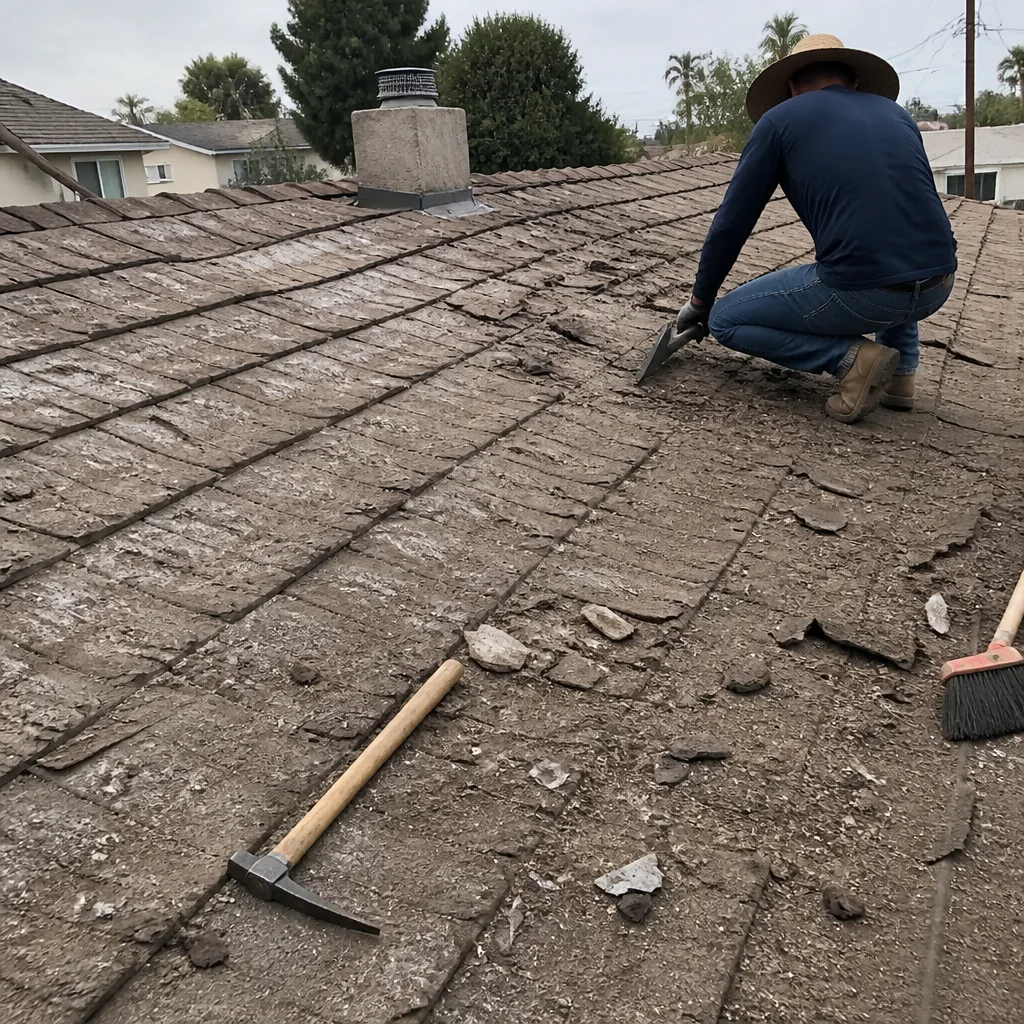
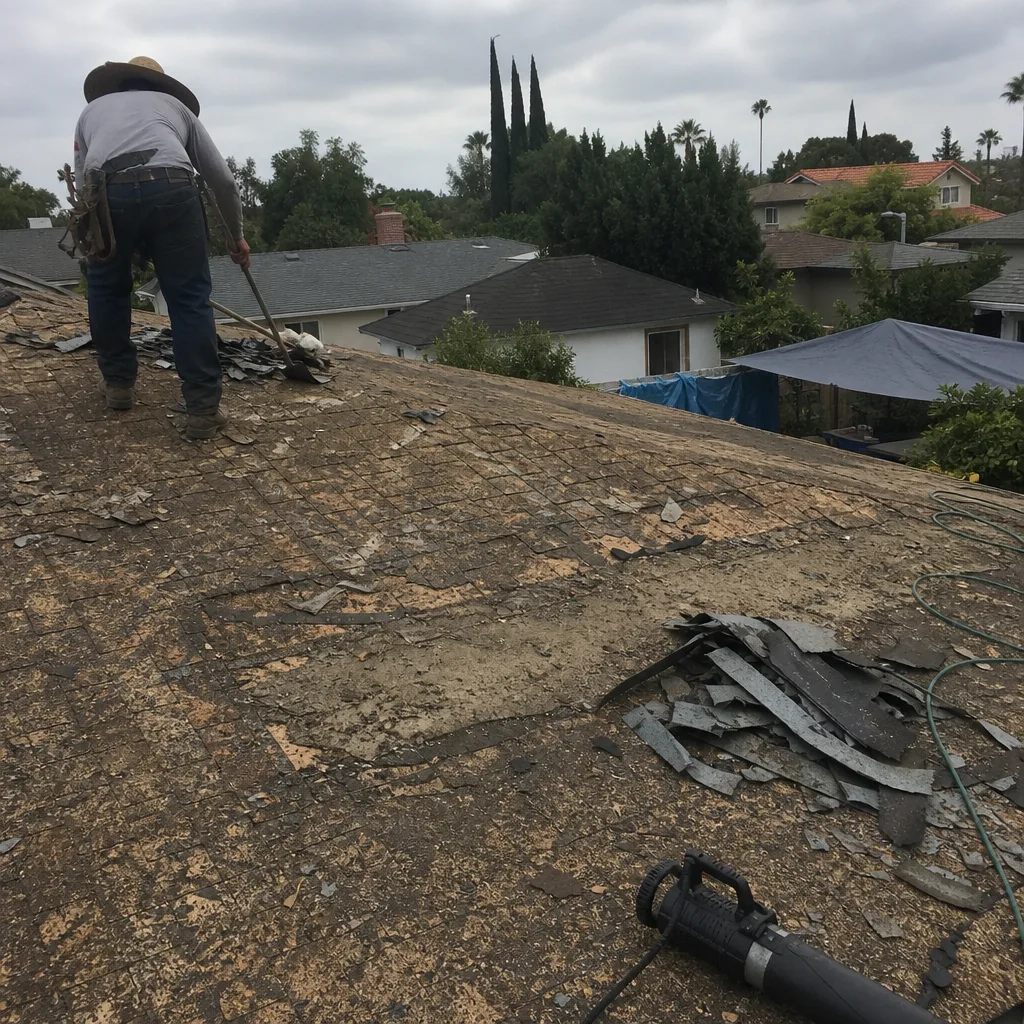
- Schedule your first inspection. The city calls this the “sheathing/nail inspection.” It happens after the old roofing is stripped and any damaged sheathing is replaced, but before the new underlayment and roofing go down. The inspector checks nailing patterns, flashing details, and the condition of the roof deck.
- Schedule your final inspection. Once the roofing is complete, the inspector returns to verify the final installation, check that flashings are properly lapped, and confirm the roofing material matches the approved submittal.
For a standard single-family re-roof, the whole permit-to-final-inspection timeline usually runs 2 to 4 weeks, assuming the roofer knows the process and the inspections are scheduled promptly. Delays typically come from one of two places: incomplete submittals (missing CRRC data is common) or failed inspections due to installation errors that have to be corrected.
One difference worth knowing: if you live in an unincorporated Orange County pocket near La Habra – parts near East La Habra or around the edges of West Coyote Hills – you’ll deal with the county building department instead, and their plan-check times tend to run longer. The same codes apply, but the administrative process is slower.
This is where a full Roof Replacement in La Habra from an experienced local contractor pays off: the permit process is simply part of the job, not an interruption. If the roofer needs to go back to the city twice because the submittal was incomplete, that’s time your roof sits without proper protection.
What a Roofing Inspection Actually Checks – and What Gets Flagged
When the La Habra building inspector arrives, they’re not just walking around with a clipboard. They’re checking specific, measurable things, and they fail roofs for the same issues repeatedly. Here’s what they look at, in order:
1. Nailing patterns and fasteners. Shingles must be nailed with the correct number of fasteners in the correct location – typically four nails per shingle for most asphalt products, six in high-wind zones. Nail heads must be flush with the shingle surface, not over-driven (which cuts through the mat) or under-driven (which leaves the nail head exposed). This is the single most common failure point.
2. Underlayment installation. The inspector checks that the approved underlayment is in place, properly lapped, and correctly fastened. In California wildfire zones and most La Habra neighborhoods, this means a single layer of ASTM-compliant underlayment for steep-slope roofs, with specific products required in designated fire zones.
3. Flashing details. This is where a lot of roofs fail inspection. Step flashing at walls, counter-flashing at chimneys, and flashing at penetrations must be installed so that water sheds properly. An incorrectly lapped flashing is a guaranteed leak – and a guaranteed correction notice.
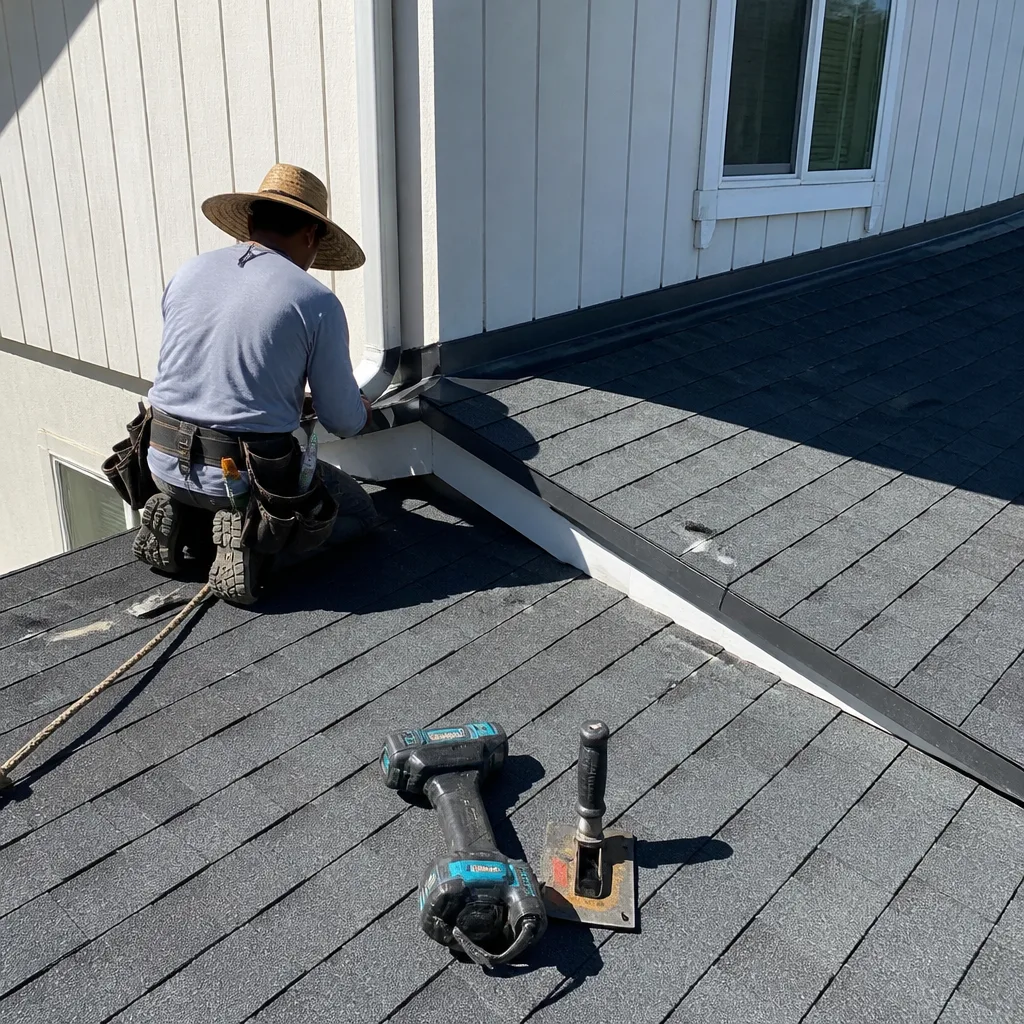
4. Roof-to-wall transitions and kick-out flashing. California code requires kick-out flashing where roof slopes intersect walls and at gutter locations, to direct water into the gutter rather than behind the siding or stucco. Inspectors in La Habra check this closely because the city’s older housing stock frequently has water damage from omitted kick-out flashing.
5. Drip edge and eave flashing. Drip edge must be installed at all eaves and rakes with the correct overhang. This is a detail that gets skipped on cheap installations and catches the inspector’s eye every time.
6. Material verification. The inspector compares what’s on the roof to the product sheet in the approved permit. If you submitted GAF Timberline HDZ in Charcoal and there’s a no-name brand on the roof, the inspection fails. This is one more reason we carry the brands we do – if the city approved a specific product, we install that exact product.
Here’s the part that surprises homeowners: most of these failures cost more to fix after the fact than they would have cost to prevent. A flashing correction might mean lifting shingles that were already nailed down, re-cutting the flashing, and reinstalling – which is more labor than installing it correctly the first time. The permit fee itself is rarely the expensive part. The corrections are.
HOA vs. Municipal Permits: When You Need Both
La Habra has a significant number of homes in HOA-managed communities – the neighborhoods around Westridge, parts of the Tree-lined streets near La Habra Boulevard, and several newer planned developments. If you live in one, you may have two separate approval processes to navigate before the city will even look at your permit.
Here’s how they interact:
HOA approval comes first. Most HOAs require architectural review before any exterior work, including roofing, is done. The HOA is not checking for Title 24 compliance or building code – they’re checking that your roof color, material, and profile match the community’s approved palette and design standards. If your HOA approves a specific Boral tile color but the city’s plan-check doesn’t see the same product on the submittal, you’ll get a conflict.
The city permit is legally required. An HOA approval does not replace a city building permit. The city is enforcing state code and local amendments; the HOA is enforcing your contract with the association. They serve different purposes, and neither has jurisdiction over the other’s requirements.
Where they conflict. Sometimes the HOA’s approved materials don’t meet the city’s Title 24 requirements. A dark, high-profile tile that the HOA loves may not meet the reflectivity minimums. In that case, the city’s requirements supersede the HOA’s – the city will not issue a permit for non-compliant material, period. Your options are to find an alternative material that satisfies both, or to seek a variance from one or both bodies.
Practical sequence to avoid conflict:
- Get your HOA’s written material approval first.
- Collect the manufacturer’s CRRC and fire-rating documentation for that specific product.
- Submit the city permit with exactly the same product specified.
- Don’t order materials until both approvals are in hand.
We tell every La Habra homeowner we work with the same thing: one honest recommendation. If the HOA-approved material won’t pass the city’s energy code, we’ll tell you before you spend a dollar on materials. Fixing a material conflict after the old roof is torn off is the most expensive way to discover you have one.
What About the 10% Repair Threshold and HOAs?
A small repair – replacing a section of shingles under 10% of the roof surface – may not trigger a city permit or a Title 24 review. But your HOA may still require approval for any exterior change, even a repair. When you have a Roof Repair in La Habra that falls under the permit threshold, check your HOA rules before the crew arrives. The city may not care, but the association’s architectural committee might.
Common Mistakes to Avoid
- Skipping the permit altogether. Some homeowners and some contractors will “save you money” by skipping the permit. What you save is $200 to $450. What you risk is a re-roof that can’t be verified by a buyer’s home inspector, an insurance claim that gets denied because the roof was illegally modified, and a retroactive permit process that costs more than the original. In La Habra, the city’s code enforcement can and does issue correction notices for unpermitted re-roofs discovered during home sales.
- Signing a contract that doesn’t list the permit as a line item. If the permit fee isn’t in the contract, it’s often because the roofer doesn’t plan to pull one. A legitimate contractor will show you the permit as a specific cost and will be the one to pull it.
- Choosing roofing material without running the Title 24 numbers. The shingle color you love may not meet the reflectivity requirements. Before you commit to a roof color, ask for the CRRC values and confirm they meet the minimums for your roof slope. This is the single most preventable mistake in La Habra roofing.
- Ignoring the HOA approval process. The city will issue your permit; the HOA will not care. Then the HOA will send a violation notice and require you to replace the roof in an approved color – at your expense. Get the HOA sign-off first, every time.
- Assuming an old roof can take a second layer. Some La Habra homes still have their original 1960s or 1970s roof decking. Two layers of shingles may not be supportable. The city requires verification of structural capacity before approving a re-roof over an existing layer.
- Not scheduling the sheathing inspection before the new roof goes on. If you skip the nail inspection and the inspector shows up to a finished roof, they can require selective tear-off to verify the nailing pattern. That’s the most expensive inspection miss there is.
- Hiring a roofer who doesn’t know La Habra’s specific amendment set. The California code is statewide, but each city adds its own amendments. A roofer who does most of their work in Los Angeles County may not know what La Habra’s Building Division asks for, which shows up as a rejected plan-check or a failed inspection.
When to Call a Professional
If your roof is at or near the point of needing replacement – visible granule loss, curling shingles, leaks around penetrations, or a roof that’s over 20 years old – the permit and inspection process is something you’ll be dealing with. The difference between a smooth job and a stressful one comes down to who’s running the permit. Dauntless Roof Repair offers free estimates in La Habra – call (844) 750-0317. We’ll walk the roof with you, tell you what’s actually needed under California code, and handle the permit paperwork end to end. From first inspection to final nail, one crew owns the job.
Frequently Asked Questions
Most re-roof permits in La Habra run between $200 and $450, based on the project’s declared valuation. The fee is set at the time of application and does not include any Title 24 compliance documentation costs or correction-related re-inspection fees. For an exact number on your project, call (844) 750-0317 and we’ll help you work up a precise estimate.
Minor repairs that do not involve structural changes or exceed 10% of the roof surface within 12 months generally do not require a permit. However, any repair involving roof deck replacement, framing, or changes to the roof profile will require a permit in La Habra. If you’re unsure, call (844) 750-0317 and we’ll tell you honestly whether your repair crosses the line.
A Title 24 cool roof is a roof system that meets California’s minimum solar reflectance and thermal emittance standards, designed to reduce heat gain and energy use. For steep-slope roofs, the minimum 3-year aged solar reflectance is 0.20 with 0.75 thermal emittance, or an SRI of 16. Many quality asphalt shingles from brands like GAF, CertainTeed, and Owens Corning meet these requirements, but you must verify the specific color’s CRRC values.
Plan-check for a standard re-roof in La Habra typically takes 3 to 7 business days, with inspections scheduled separately. The full process from permit application to final inspection usually runs 2 to 4 weeks for a straightforward single-family re-roof, assuming the submittal is complete and inspections pass on the first visit.
Yes, at least two inspections are required for a full re-roof in La Habra: a sheathing/nail inspection after the old roof is stripped, and a final inspection after the new roofing is installed. The inspector checks nailing patterns, underlayment, flashing details, and verifies the installed material matches the permit submittal.
An unpermitted re-roof can result in code enforcement action from La Habra, denial of a future home sale when the buyer’s inspector flags it, and potential insurance claim denial for roof damage. The city can require you to obtain a retroactive permit, which often involves a penalty fee and may require destructive inspection to verify hidden installation details. The repair cost for an unpermitted roof is almost never worth the permit savings.
The Bottom Line
California’s roofing permit system is the state’s way of ensuring your roof performs, resists fire, and doesn’t become an energy liability. In La Habra, that means understanding the Title 24 cool-roof thresholds, budgeting $200 to $450 for the permit itself, and choosing a contractor who will handle the submittal, inspections, and corrections without awkward surprises. The mistakes that cost homeowners the most are the preventable ones – skipping the permit, choosing non-compliant materials, and missing the scheduling windows. Get the HOA sign-off first, verify your material’s CRRC values before you commit, and use a roofer who knows the city’s process. Call Dauntless Roof Repair at (844) 750-0317 for a free estimate, and we’ll walk you through exactly what your project needs – and what it doesn’t. Explore more guides & resources on La Habra roofing, permits, and home protection.
Written by the team at Dauntless Roof Repair, serving La Habra since 2017.
See the difference
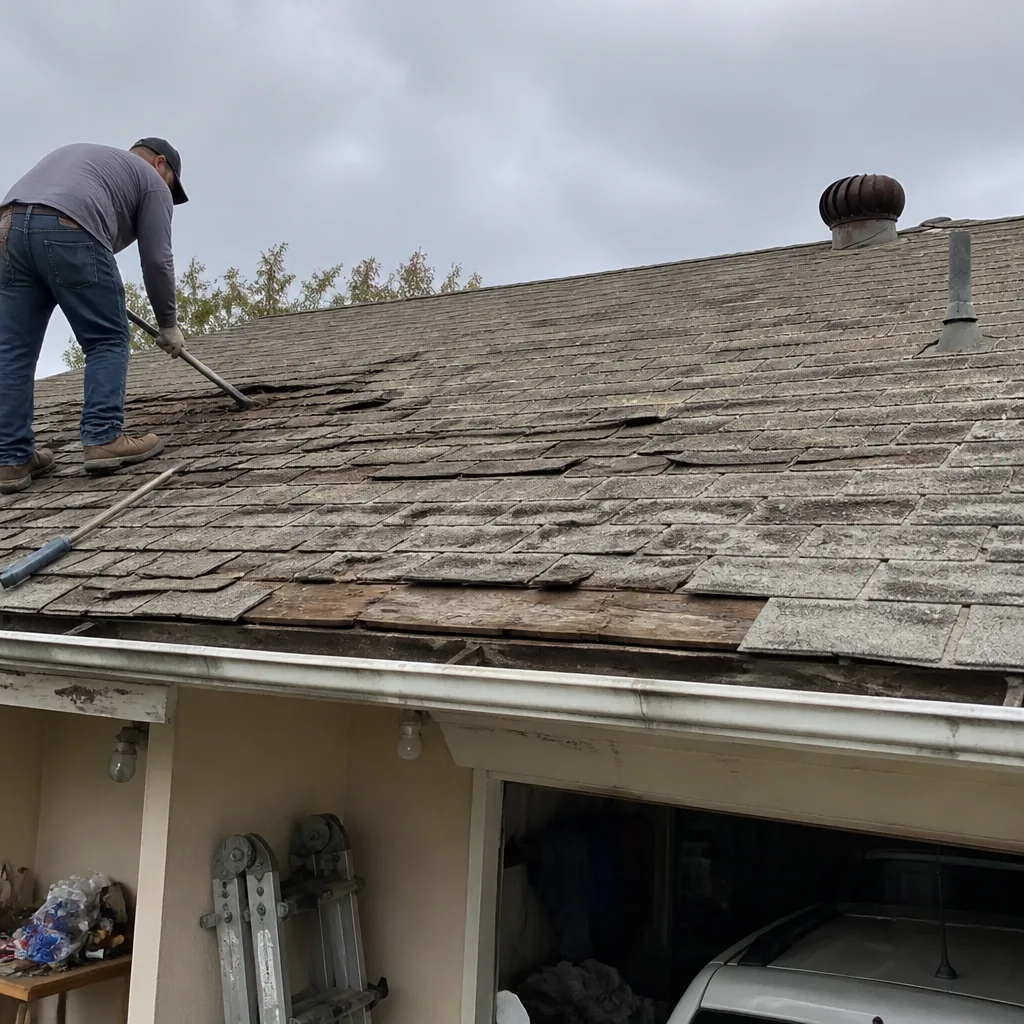 Before
 After
 Before
 After
 Before
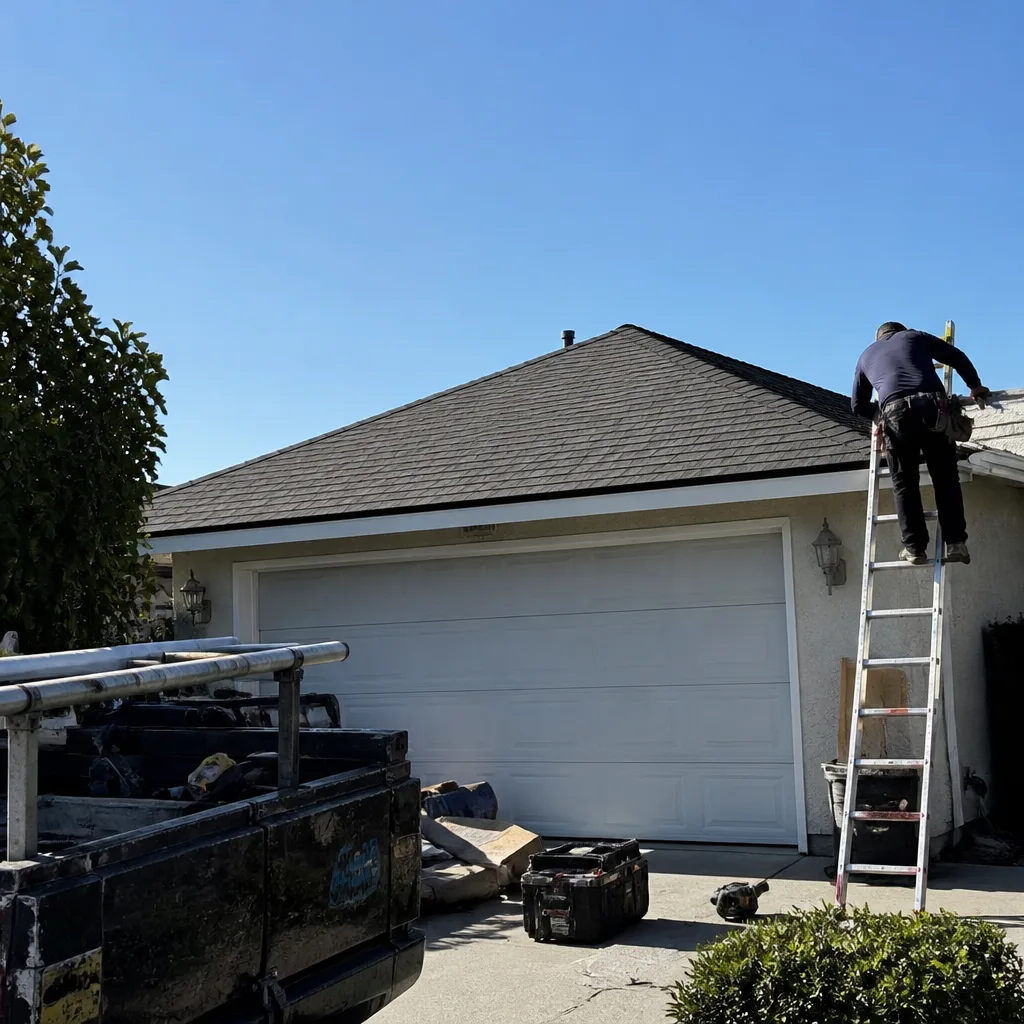 After