
Last updated October 31, 2026
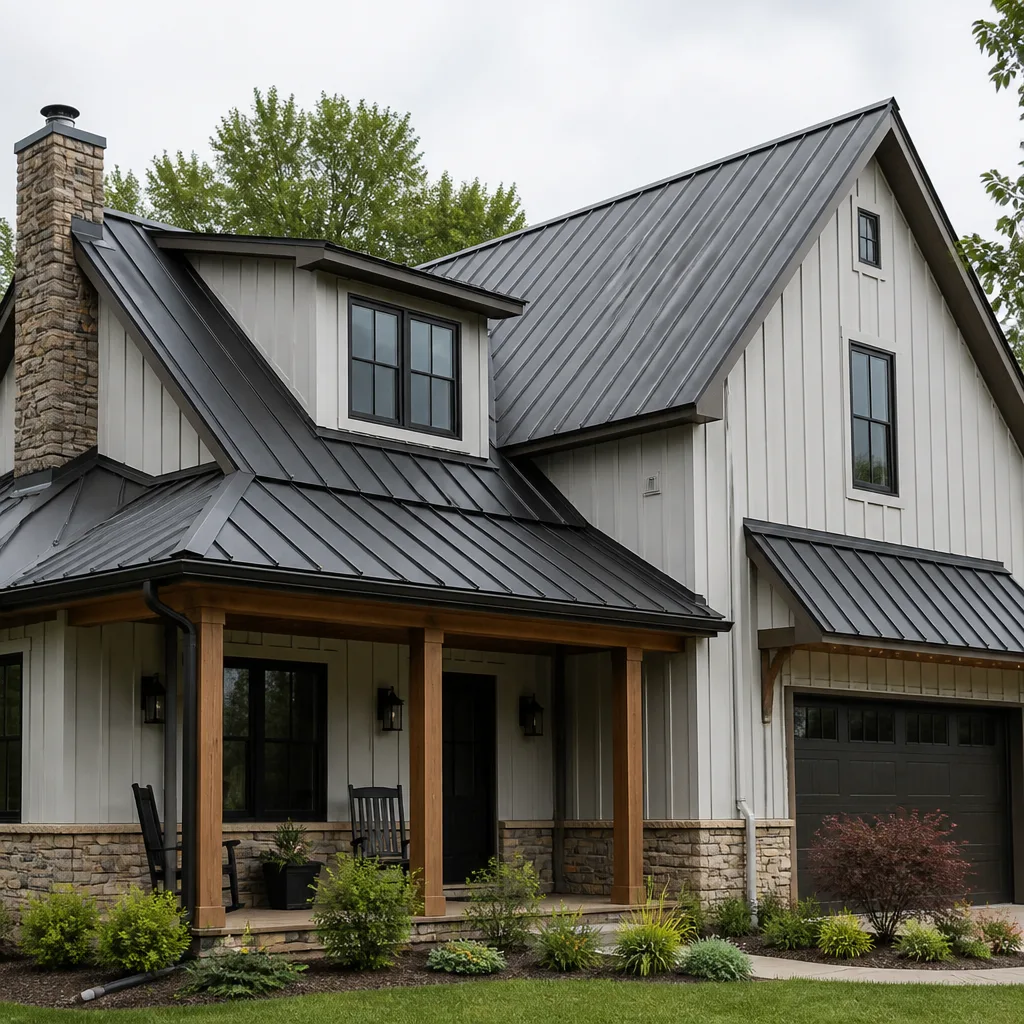 Metal roofing
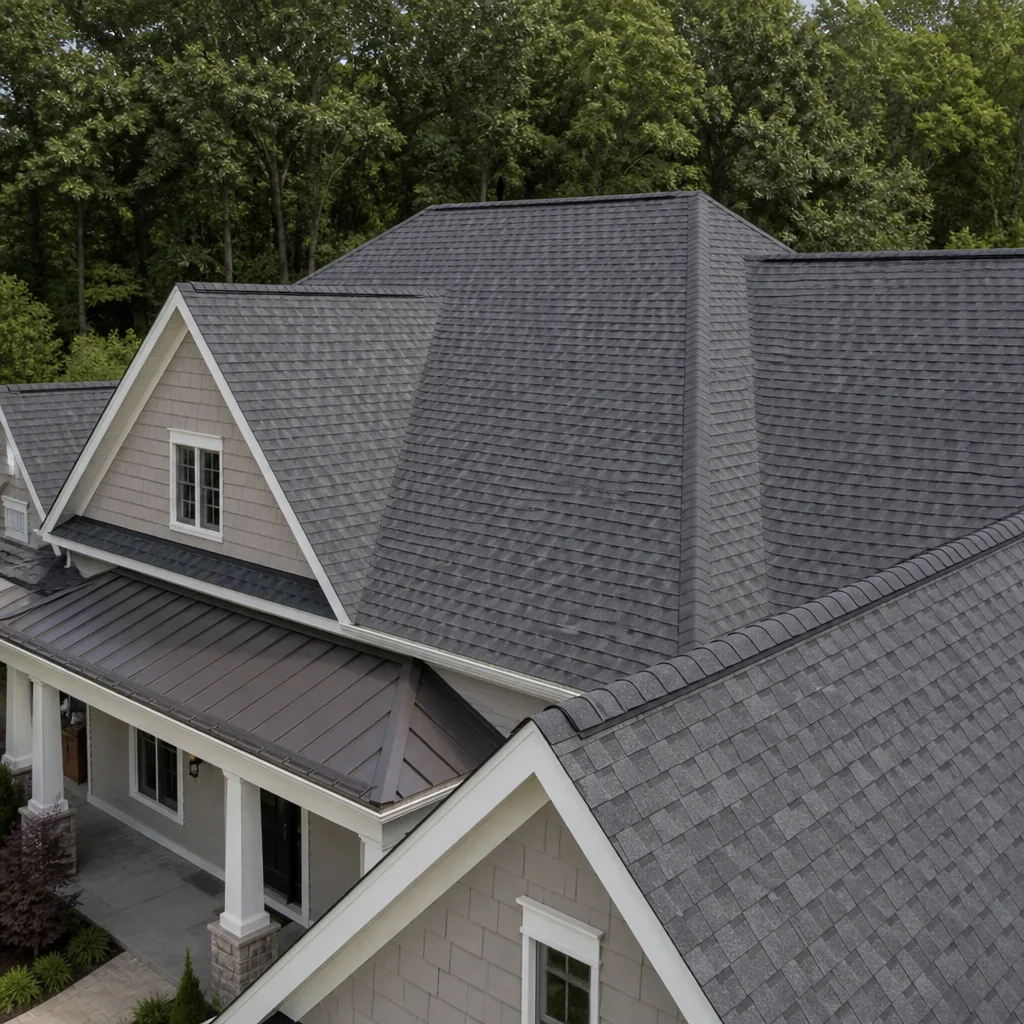
 Architectural shingles
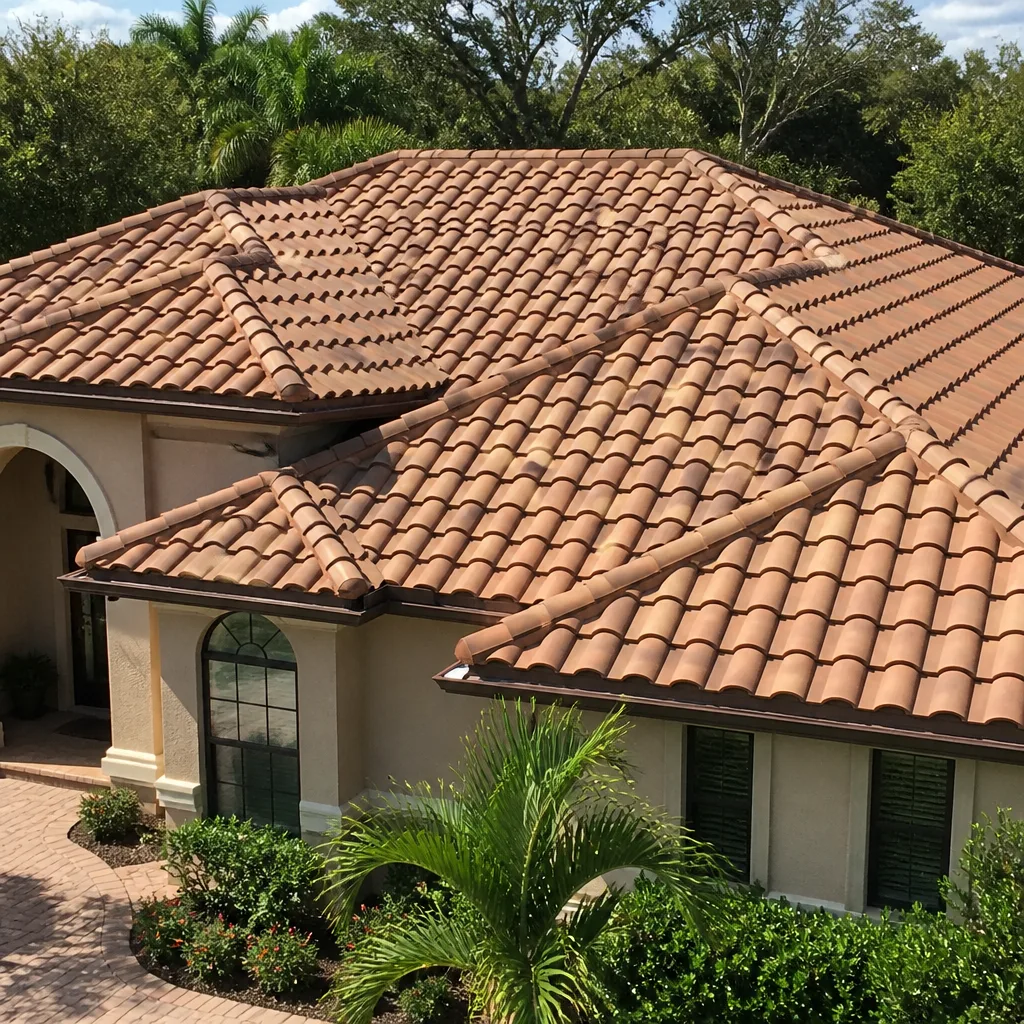 Tile roofing
 GAF
 Owens Corning
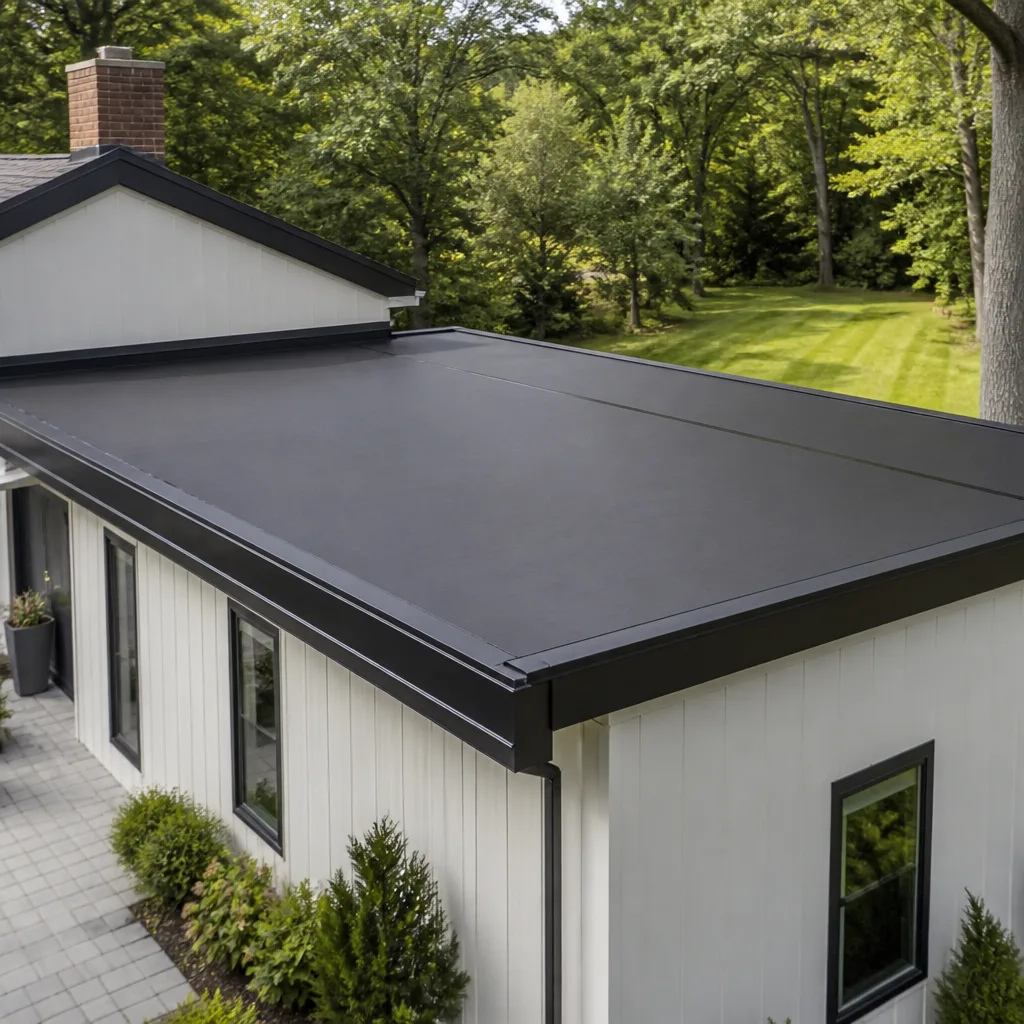 Flat & low-slope
Free roof inspection with deck photos before we talk money - GAF and Owens Corning certified installation
Roofing Warning Signs: A La Habra Homeowner’s Reference Guide
Here’s something most La Habra homeowners don’t realize: the roof failures we see most often were visible for months before they caused real damage. Not as dramatic holes or missing tiles, but as small, quiet signals that got dismissed. A lifted cap tile along the ridge. A faint water stain shaped like a teardrop on the garage ceiling. Granules collecting in a rain gutter that had nothing to do with the recent wind. These are the warning signs that matter. In 15 years of working on roofs in this city, we’ve watched each of them turn into four-figure repairs because no one knew what they were looking at. This complete guide to roofing in La Habra covers every warning sign worth knowing, how to spot it from the ground, which ones need immediate attention, and which ones you can monitor. You’ll also learn how to document what you find for insurance purposes and when a professional opinion is genuinely warranted.
Styles & brands we work with
Quick Answer
The roofing warning signs that matter most for La Habra homeowners are subtle, not dramatic: lifted or shifted ridge caps, faded or bare patches on tile where the glazing has worn away, granule accumulation in gutters, dark ceiling stains with specific shapes, and daylight visible through attic vents. Most of these can be spotted from the ground with binoculars. The ones you should never ignore are any sign of water entry, sagging roof lines, or tile displacement along the ridge or eaves, because in La Habra’s Santa Ana wind season, a small opening becomes a big one fast. When in doubt, a professional roof inspection costs far less than the repair you’re trying to avoid.
Table of Contents
- Why La Habra Tile Roofs Fail Differently
- The Ground-Level Inspection: What You Can Actually See
- Interior Warning Signs: Reading Ceiling Stains and Wall Streaks
- Underlayment Failure: The Hidden Roof Killer in Hot Climates
- Ventilation and Attic Humidity: The Warning Sign You Can Measure
- Granule Loss on Composite Shingles: Age vs. Defect
- Efflorescence on Tile: Cosmetic or Structural?
- What Needs Attention This Week vs. What Can Wait
- How to Photograph and Document Roof Damage for Insurance
- Common Mistakes to Avoid
- When to Call a Professional
- Frequently Asked Questions
- The Bottom Line
Why La Habra Tile Roofs Fail Differently
La Habra sits in a strange sweet spot for roofing problems. We get the Santa Ana winds that tear through the canyons in fall and winter, we get hot summers that bake underlayment from above while attic heat cooks it from below, and we get occasional heavy rain that finds every small opening that wind already created. Most of the roof failures we see in La Habra aren’t from the tile itself. The tile on the roof is often perfectly fine. What fails is everything underneath it: the underlayment, the flashing, the ridge caps, and the fasteners holding it all down.
Here’s the sequence we see over and over. A Santa Ana wind event lifts a single cap tile along the ridge. The homeowner doesn’t notice because, from the ground, the roofline looks unchanged. The lifted cap tile leaves a small opening where rain can enter. The next rainstorm sends water under the tile, where it saturates the underlayment and eventually finds its way to a rafter or the plywood decking. One rain season later, the homeowner notices a ceiling stain and calls about a roof leak. By then, the rafter has begun to rot and the repair is no longer a simple tile reset. It’s a structural repair plus a section of underlayment replacement, and it costs thousands instead of a hundred dollars.
This is why we tell homeowners to look for the small things. The dramatic failures, the big holes, the obviously missing tiles, those get noticed. The quiet ones are the ones that cost real money. Dauntless Roof Repair home has built its entire approach around this reality: catch the small sign early and you’re paying for a maintenance repair. Miss it, and you’re paying for a structural repair. Same roof. Different price.
Understanding the failure sequence helps you know what to look for. The most vulnerable points on a La Habra tile roof are the ridge, the hips, the valleys, and anywhere flashing meets tile, like around chimneys, vents, and skylights. Wind attacks these edges first. Heat attacks the underlayment everywhere. Water exploits whatever openings the wind created. If you learn to check the edges and the flashing points, you’ll spot 90 percent of the problems before they become problems.
The Ground-Level Inspection: What You Can Actually See
You don’t need a ladder to spot most roof warning signs. In fact, we tell homeowners to stay off the roof entirely. Walking on a tile roof without knowing what you’re doing breaks tiles and makes problems worse. The ground-level inspection, done with a pair of binoculars and a little patience, catches the vast majority of early warning signs. Here’s how to do it properly.
Step-by-Step Ground Inspection
- Start at the curb or sidewalk, directly facing the roof’s main slope. Use binoculars to scan the ridge line from one end to the other. Look for any cap tile that appears lifted, shifted, or sitting at a slightly different angle than its neighbors. This is the single most common warning sign we see in La Habra after wind events.
- Move to each corner of the house and repeat the scan on every roof plane. From the corners, you can see the hips and the valleys where two roof planes meet. Look for any tile that appears cracked, chipped, or out of alignment, especially along the first three rows from any edge.
- Check the eaves with particular attention to any area facing south or west. In La Habra, these exposures get the most direct sun and are usually where underlayment fails first. Look for any tile that appears to sit lower than the row above or below it, or any area where the roofline appears uneven or wavy.
- Inspect all flashing points: chimney, plumbing vents, attic vents, skylights, and anything else penetrating the roof. Look for gaps between the flashing and the tile, exposed nails, or any sign of cracked caulking. These points are responsible for a large share of roof leaks in La Habra.
- Scan the gutters and downspouts from the ground. Look for granules whose color matches the roof. With a tile roof, you won’t see granules, but you may see pieces of broken tile. With a composite shingle roof, granules in the gutter are one of the most reliable warning signs.
- Check the roof’s edge lines. Stand directly in front of any roof edge and look down the line. It should be perfectly straight. Any sag or dip, even slight, is a red flag. Sagging indicates either a structural issue, water-damaged decking, or both, and should be evaluated by a professional.
This ground inspection takes 15 to 20 minutes. Do it twice a year: once in late summer, before the Santa Ana season starts, and once in spring, after the rain stops. The seasonal timing matters because the most common failure points expand and contract with temperature and moisture. What looks fine in September can open up by December. If you’d rather have a professional do this, our Roof Inspection in La Habra covers everything described here plus an on-roof assessment and attic evaluation.
What Ground-Level Inspection Cannot See
Be honest about the limits. No ground inspection reveals the condition of the underlayment beneath the tile. It cannot show you whether attic ventilation is working correctly. It won’t catch early-stage flashing corrosion that’s hidden by tile overlap. And it definitely can’t tell you whether previous repairs were done correctly. These require access. A tile or two lifted in a controlled way, an attic walkthrough, and in some cases a moisture meter. That’s where professional inspection earns its cost.
Interior Warning Signs: Reading Ceiling Stains and Wall Streaks
Most homeowners discover roof problems from the inside first. They notice a stain on the ceiling or a streak down a wall. What most don’t know is that the shape, color, and location of that stain tell you a lot about what’s happening. Here’s what we’ve learned from thousands of leak investigations in La Habra homes.
Ceiling Stain Shapes and What They Mean
- Teardrop or circular stain, centered and isolated: This usually indicates a small, slow leak. Water is entering at a single point and dripping straight down. The fix is often localized, such as a single cracked tile or a small flashing gap. These are the leaks to address quickly because they only get worse, but they’re typically not emergencies.
- Long, narrow stain running parallel to a wall or roof edge: This pattern suggests water is traveling along a rafter or joist before finding an exit point. The actual leak may be several feet away from the stain. This is one of the most misdiagnosed signs in roofing. The stain location is where water exits the ceiling, not where water enters the roof.
- Multiple stains in a cluster or a ring-shaped stain with a darker center: This indicates water that has been pooling or spreading over time. The dark center is the primary entry or saturation point. These stains usually mean the leak has been active for longer than the homeowner realizes, and the affected drywall or plaster will likely need repair.
- Yellow or brown stain with a rusty color: The discoloration means the water is being contaminated by rust, likely from a corroding nail, a metal flashing component, or a plumbing pipe. This is common in older La Habra homes where galvanized flashing has reached the end of its life. The leak may be minor, but the corrosion source needs to be found and replaced.
- Stain that appears to move or expand after rain: This tells you the leak is still active and water is actively saturating the insulation above the ceiling. If the insulation is soaked, it contributes to the stain’s growth even after the rain stops. Active leaks warrant professional attention sooner rather than later.
Wall Streaks and Paint Bubbling
Water that enters the roof and travels down a rafter or sheathing will often exit at the wall line, not the ceiling center. You’ll see a vertical streak or dark mark running down an exterior wall or an interior partition. Paint bubbling, peeling, or cracking along the top few inches of a wall, especially near a corner, is another sign that water is traveling behind the surface. These signs indicate a leak that’s been active long enough to saturate building materials. If you see any of them, check the room’s humidity and look for any corresponding ceiling stain. They usually appear together.
Attic Clues Most People Skip
If your home has an accessible attic, do a quick visual check once or twice a year. You’re looking for dark staining or water lines on the underside of the roof decking, wet or crusty insulation, rust on plumbing vent pipes, and any pinprick of light visible through the decking. Light means a hole, and a hole means water entry. You should also check for musty, humid air, which indicates a ventilation problem even if no active leak is present. In La Habra, inadequate attic ventilation is one of the most overlooked roofing warning signs, and our Seasonal Roofing Care for La Habra: Year-Round Homeowner’s Guide covers how to time these checks.
Underlayment Failure: The Hidden Roof Killer in Hot Climates
This is the section most generic roofing guides skip. Underlayment is the waterproof layer beneath the tile or shingles. It’s the actual water barrier. The tile is the shield against sun and impact, but it’s not waterproof. Tile sheds water, but it doesn’t seal water out. That’s the underlayment’s job. And in La Habra’s climate, underlayment fails faster than it does in cooler, damper climates because heat is brutal on the materials.
Most of the underlayment installed on La Habra roofs before the mid-2000s was asphalt-saturated felt paper, often called tar paper or felt. It loses flexibility as it ages, becomes brittle, and eventually develops microscopic cracks. South- and west-facing slopes, which get the most intense sun, lose their underlayment years before other slopes do. When we inspect a 25-year-old La Habra roof and find failed underlayment on the south slope but intact underlayment on the north, that’s not an anomaly. That’s the expected pattern.
The warning signs of underlayment failure are indirect. You won’t see failed underlayment from the ground. What you’ll see are the consequences: leaks that appear even though the tiles look fine, tile that seems to sit unevenly, or a roof that needs frequent localized repairs, with one leak fixed and another appearing a few months later. If your roof is over 20 years old and you’re seeing repeated repairs, the underlayment is likely reaching the end of its life. At that point, the honest recommendation is usually a Roof Replacement in La Habra: new underlayment, new tile or shingles, and a warranty. Some crews will keep patching a failing underlayment roof because that’s what the homeowner asks for. We approach it differently. We’ll tell you when patching is throwing money at a problem that needs a real fix, and when replacement is actually the cheaper decision over a five-year horizon.
Modern underlayment materials, including synthetic options offered by manufacturers like GAF and CertainTeed, outperform the old felt paper significantly. They’re more resistant to UV exposure, handle higher temperatures without cracking, and provide better secondary water protection. If you’re replacing a roof in La Habra, material choice matters far more than most homeowners realize. This is one reason we carry seven manufacturers’ lines. The right underlayment for a south-facing slope exposed to unrelenting sun is not necessarily the same product you’d choose for a heavily treed property in a cooler climate.
Ventilation and Attic Humidity: The Warning Sign You Can Measure
Roofing guides almost never include this, but in La Habra it’s one of the most important warning signs we see. Attic ventilation failures cause damage that looks like leak damage and gets misdiagnosed as leak damage constantly. Here’s the mechanism: your attic needs air movement. Intake air comes in through soffit vents or eave vents, and exhaust air leaves through ridge vents or gable vents. When that flow is blocked, heat and moisture build up in the attic.
In La Habra, where summer temperatures routinely hit the 90s and the sun beats on tile roofs for eight months of the year, a poorly ventilated attic can reach 140 degrees or more. That heat radiates down through the insulation and increases your cooling load, but that’s the small problem. The real problem is what it does to the roof system. The underlayment bakes from both sides. The roof decking, usually plywood or OSB, expands and contracts. Fasteners work loose. The tile’s glazing can eventually show signs of heat stress. And condensation forms when warm, moist attic air meets cooler surfaces at night or after a rain. That condensation drips onto the insulation and the ceiling below, and it looks exactly like a roof leak.
Here’s the key warning sign for La Habra homeowners: a ceiling stain that appears when there hasn’t been any rain. If you see moisture staining on your ceiling in August or September, after months without rain, you don’t have a leak. You have a ventilation failure. Calling someone to patch the roof won’t fix it because the roof isn’t leaking. The attic is sweating.
You can measure the warning sign. A basic indoor/outdoor thermometer with a humidity sensor costs about $20. Put one in the attic. On a typical La Habra summer afternoon, the attic should be no more than 15 to 20 degrees warmer than the outside air. If it’s 30 or 40 degrees hotter, ventilation is failing or was never adequate. The fix is usually straightforward: clearing blocked soffit vents, adding ridge venting, or installing an attic fan. It’s a repair that pays for itself in reduced cooling costs and prevented roof damage. If you suspect a ventilation issue, mention it when you schedule your inspection. A good inspection includes the attic, and the attic findings often change the recommended fix.
Granule Loss on Composite Shingles: Age vs. Defect
La Habra has plenty of tile roofs, but some homes still have composite shingles, and understanding granule loss is critical for those. The granules on a shingle are not decorative. They protect the asphalt from UV degradation. When granules wear off, the shingle’s lifespan accelerates dramatically. But not all granule loss means the same thing, and knowing the difference saves money.
Normal Age-Related Granule Loss
Shingles lose granules throughout their life. Light, even loss across the entire roof over many years is expected. By year 15 of a 30-year architectural shingle, a small amount of granule accumulation in the gutters is normal. The shingles may look slightly faded overall, but the surface is still fully covered. This roof is aging, and you should monitor it, but it’s not failing.
Warning-Sign Granule Loss
What concerns us as roofers is localized, uneven, or sudden granule loss. Here’s what the patterns look like:
- Bare patches on shingle edges or centers, where the underlying mat is visible: This indicates the shingle has lost its protective layer and will begin to crack, curl, or blister. It’s a countdown, not a monitor situation.
- Granule loss primarily on one slope, especially south or west-facing: This points to heat stress from inadequate ventilation or the natural consequence of extreme sun exposure. The slope will probably need replacement sooner than the rest of the roof.
- Granule loss concentrated near plumbing vents, chimneys, or other penetrations: This often indicates a problem with the penetration itself: a rusted vent pipe, a failing boot, or water entering and washing the granules away from underneath.
- Sudden heavy granule run-off after a storm: Hail or severe wind can strip granules. If you find piles of granules at the bottom of downspouts or coating your driveway after a storm, document it. You may have a valid insurance claim.
Brands like Tamko and Atlas make shingles with different granule adhesion technologies and different durability profiles. If you’re comparing materials for a replacement, our guide to choosing the right roofing brand in La Habra covers granule retention and other factors worth discussing. It’s one of the reasons we carry multiple brands rather than pushing one. The right shingle for a heavily sun-exposed La Habra roof may not be the right shingle for a shaded property in a different part of the state.
Efflorescence on Tile: Cosmetic or Structural?
Efflorescence is the white, chalky deposit that appears on concrete or clay tile. In La Habra, it shows up commonly on clay tile roofs, especially after rain. Most homeowners notice it and assume the tile is failing or the roof is leaking. Usually, neither is true. But occasionally it can indicate a real problem, and knowing the difference matters.
Efflorescence itself is simply soluble salts migrating to the tile’s surface as moisture evaporates. It’s a cosmetic condition that affects appearance, not structural integrity. On an older clay tile roof in La Habra, some efflorescence is normal and harmless. It often appears on tile in shaded areas, where moisture evaporates more slowly and leaves the salts behind. If you see it on the north side of your roof or under a tree canopy, it’s almost certainly cosmetic.
The warning sign occurs when efflorescence appears in combination with other symptoms. If you have efflorescence on tile that also shows visible cracking, spalling, or delamination, the tile itself is deteriorating and may need replacement. If the efflorescence is widespread across the entire roof and accompanied by musty attic smells or attic moisture, the roof may be holding excessive moisture, which often points to a ventilation problem. And if you see white streaks on fascia boards or exterior walls below the roofline, that’s not efflorescence. That’s mineral deposits from water running out of the roof system, which is a leak indicator.
One specific pattern worth knowing: efflorescence on Boral clay tile products is sometimes confused with the tile’s natural aging patina. Boral tile in particular develops a weathering surface that can look like efflorescence but isn’t. If you’re not sure, have a professional look at it during a routine inspection. Don’t replace tile because of cosmetic efflorescence. That’s paying for appearance, not function, and a good roofer will tell you so before taking the job.
What Needs Attention This Week vs. What Can Wait
Not every warning sign is an emergency. Treating them all as emergencies is how homeowners overspend. Treating none of them as emergencies is how they underspend and pay more later. Here’s how we categorize what we see in La Habra.
Get a Roofer This Week
- Any active leak, visible water entry, or fresh ceiling staining. Water is actively damaging the roof structure. Every week of delay adds to the repair cost and the risk of mold.
- Sagging or dipping roof lines, any roof plane, any degree. This indicates a structural issue that may worsen suddenly. Don’t wait for it to become visible from the street or, worse, audible at night.
- Missing or displaced ridge caps after a Santa Ana event. The opening is a direct water entry point, and wind will continue to work on the surrounding caps. Next rainstorm equals a leak.
- Daylight visible through the attic decking. Any opening in the roof system is an invitation for water. Small openings become big ones quickly.
- Tile that has slid out of position leaving a visible gap. These gaps expose the underlayment to direct UV and create a direct water path once it rains.
Monitor for Up to a Year
- Cosmetic efflorescence without any other symptoms. Note it. Take a photo. Compare it in six months. If it’s spreading rapidly or you notice other signs, escalate.
- Light, even granule loss on a shingle roof under 15 years old. This is normal aging. Check again after major storms. Watch for any bare patches developing.
- Minor surface cracking on tile with no displacement. If the cracks aren’t widening and no tile has shifted, you can monitor. If you have a recent photo to compare against, that’s even better.
- Mild staining in the attic on the underside of decking that’s bone dry and hasn’t changed over time. Some stains are historical. If they’re not wet, not growing, and not accompanied by mustiness, they’re likely inactive.
- Faded tile color. Sun fading is cosmetic for most tile. If the glaze still covers the surface, the tile is doing its job.
There’s a pattern here. The urgent items involve water entry, structural movement, or open gaps. The monitor items are cosmetic or slow-moving. If you’re not sure where something falls, a professional inspection is cheap relative to the cost of guessing wrong. That’s exactly what a Roof Repair in La Habra consultation is for: telling you what’s urgent and what’s not, whether it’s the right time for a repair or whether the roof has enough life left to wait.
How to Photograph and Document Roof Damage for Insurance
When it comes time to file an insurance claim for roof damage, what you documented before the claim matters as much as what the adjuster sees after. A photo of a lifted ridge cap taken in October, long before the January rainstorm that flooded your garage, is often the difference between a denied claim and a covered one. Here’s how to document roof warning signs in a way that holds up.
- Establish the date. Use a camera or phone that timestamps photos automatically. If your phone doesn’t timestamp, include a newspaper in one wide shot of the area, the way an insurance adjuster would. The date establishes when you noticed the problem, which is often the most contested fact in a roof claim.
- Take the “context shot” first. Stand far enough back to show the entire roof plane, the house, and the surrounding area. This photo establishes the location and orientation.
- Move closer for the “problem shot.” Use binoculars or a zoom lens to capture the specific issue as clearly as possible. A lifted cap tile, a displaced section of tile, a cracked flashing seam. The closer and sharper, the better.
- Take a reference shot from a different angle. A second perspective helps the adjuster understand the problem’s location and severity.
- Photograph the interior signs too. If you have a ceiling stain, an attic water line, or wall streaking, photograph all of it. Interior and exterior documentation together tell the full story.
- Keep a simple log. A note on your phone with the date, what you observed, and a photo reference. That’s enough. You don’t need a formal inspection report or a professional assessment to start documenting. If a professional inspects later, their report adds weight to your log.
If a storm has already caused damage before you’ve documented anything, photograph everything immediately, before repairs or tarping. Tarps can protect the home, but they also conceal evidence. If you need to tarp, photograph the damage first, then tarp, then photograph the tarped roof from the same angles. Your insurer will appreciate the sequence.
Common Mistakes to Avoid
- Ignoring a small ceiling stain because it’s small. A small stain means water is getting in. The leak will only grow. In La Habra, where rain is seasonal, homeowners often dismiss a small stain in February only to discover a major leak the following December after the stain has dried. The roof didn’t heal. It just stopped raining.
- Assuming tile roofs don’t need maintenance. The tile itself may last 50 years or more, but the underlayment beneath it typically lasts 20 to 30 years in La Habra’s heat. A tile roof that’s 25 years old is not maintenance-free. It just looks that way from the street.
- Power washing the roof. Power washing tile removes its glazing, weakens its surface, and drives water under the tile where it can reach the underlayment. It turns a cosmetic dirt problem into a genuine water intrusion problem. Don’t do it.
- Walking on the roof to inspect it. Tile breaks under foot pressure, especially if the underlayment is older and slightly soft. Every broken tile creates a new water entry point. The ground inspection described above keeps this from happening.
- Delaying documentation until you file a claim. Insurance companies are more receptive to claims when homeowners can demonstrate they noticed and documented a problem before it became catastrophic. Photographs from six months earlier carry weight.
- Accepting a patch-only recommendation for a failing underlayment roof. Some roofers will keep patching a roof whose underlayment is shot because patching is easy work. It’s also the wrong fix. If you’re on your third or fourth repair in two years, the patch strategy isn’t working.
- Ignoring the attic entirely. The attic is where many roof failures show up first: water stains on decking, condensation, musty smells, visible light through gaps. A two-minute attic check twice a year catches problems months before they reach the ceiling.
When to Call a Professional
Call a professional when you see any of the urgent warning signs listed above, when you’re not sure what you’re looking at, or when the roof is over 20 years old and hasn’t been inspected recently. A professional inspection costs a few hundred dollars and usually takes under an hour. It gives you a clear picture of what you actually need, which is not always the same as what you think you need from the ground. We’ve told homeowners they needed a $200 repair and they braced for a $15,000 replacement. We’ve also told homeowners the opposite. The point is the honest assessment. Dauntless Roof Repair offers free estimates in La Habra – call (844) 750-0317 to schedule yours.
Frequently Asked Questions
A roof leak shows up as a ceiling stain, wall streak, or paint bubbling, often appearing or worsening after rain. In La Habra, also watch for attic condensation stains that appear during dry months, which indicate a ventilation problem rather than a leak. Call (844) 750-0317 if you see any of these signs – a quick inspection can tell you which problem you’re dealing with.
Twice a year is the right cadence for most La Habra homes: once before Santa Ana season and once after the rainy season. If your roof is over 20 years old or has been through a major wind event, consider a professional inspection annually or after any severe storm. The goal is catching the small warning signs before they become expensive repairs.
A simple repair, like resetting a lifted ridge cap or replacing a cracked tile, typically costs between $150 and $400. A leak that has already caused structural damage or underlayment failure can cost $1,000 to $4,000 or more depending on the extent. The cost difference is why early detection matters so much. Call (844) 750-0317 for a free estimate on your specific situation.
We don’t recommend it. Getting on a tile roof without the right experience and equipment risks breaking more tiles, creating new leaks, and putting you in a dangerous position on a sloped surface. Roof work is one of those areas where DIY almost always costs more than it saves. A professional can handle a lifted tile in minutes, and the repair cost is usually low.
Under La Habra’s heat and occasional Santa Ana winds, the tile itself can last 50 years or more with proper care, but the underlayment typically needs replacement after 20 to 30 years. That’s the timeline that drives most roof replacement decisions, not the tile failing. If your tile roof is approaching 25 years old, it’s worth having the underlayment assessed.
Most homeowners’ policies cover wind damage, but the claim outcome often depends on the documentation you have. Photographs of the roof before and after the event, a dated log of your observations, and a professional inspection report all strengthen your claim. Document first, then file. If you need a professional assessment before filing, we can help.
The Bottom Line
The warning signs that protect your La Habra roof are usually small and easy to dismiss. A lifted cap tile. A teardrop stain on the garage ceiling. Granules in the gutter. Attic humidity you can measure with a $20 thermometer. Each one tells you something specific, and each one is far cheaper to address early than late. Learn the ground inspection routine, check your attic twice a year, and photograph everything you find, and explore our more guides & resources for ongoing roof care. When you’re not sure what something means, get a professional assessment. It’s the cheapest insurance there is against a roofing repair you can’t put off.
Written by the team at Dauntless Roof Repair, serving La Habra since 2017.
See the difference
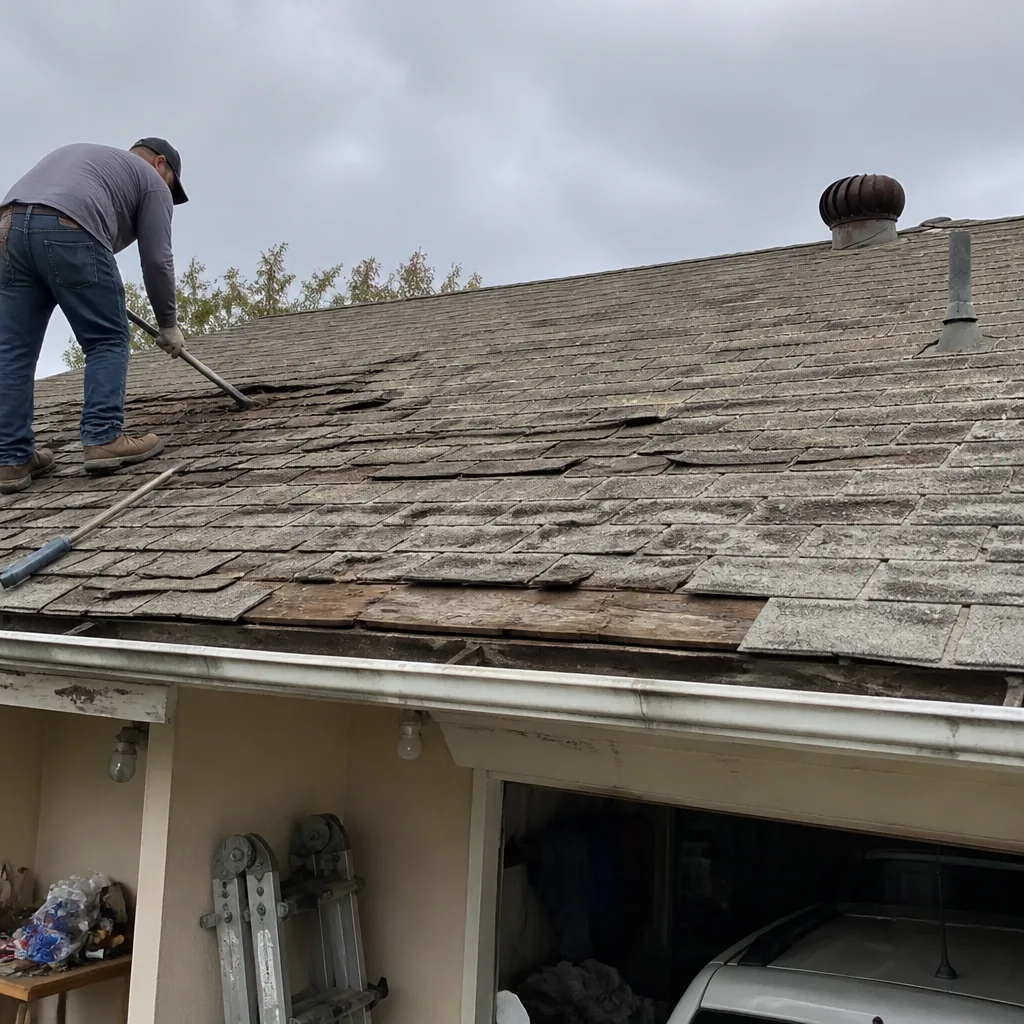 Before
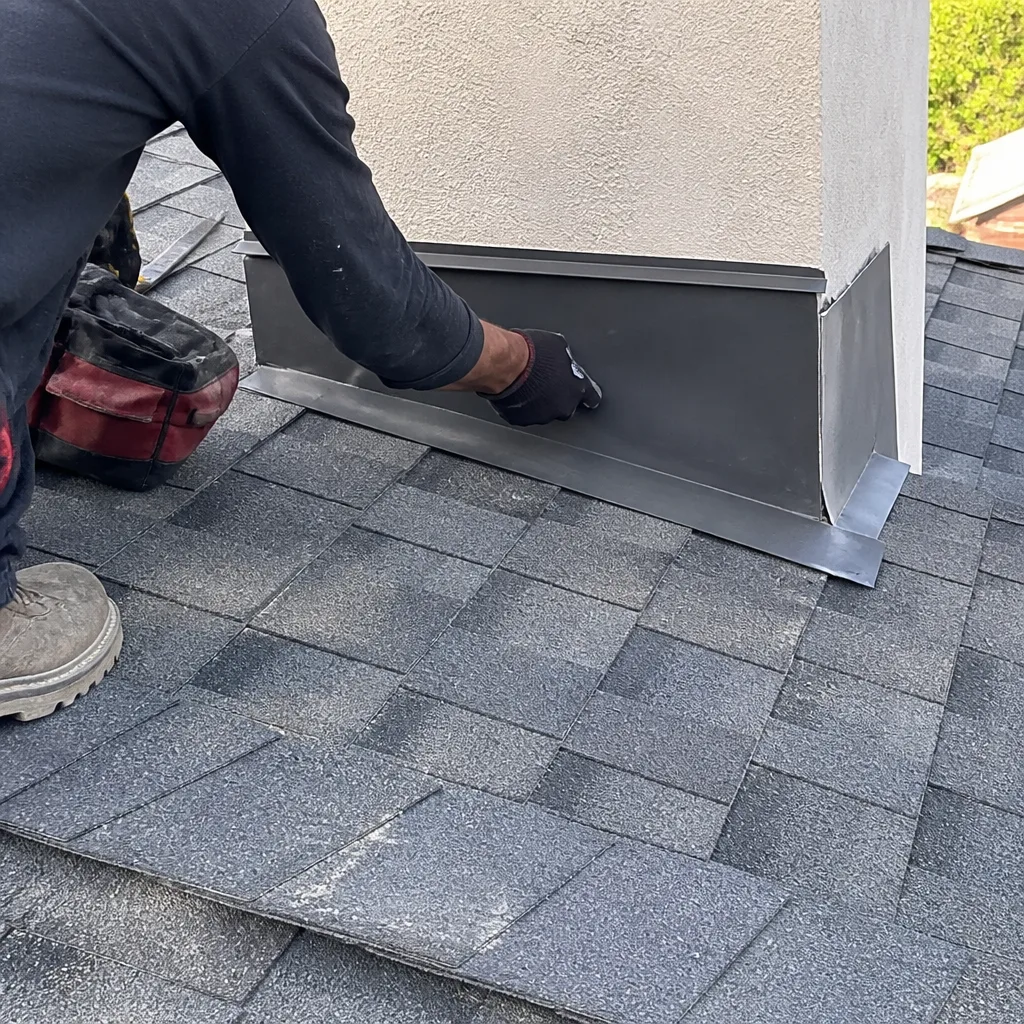 After
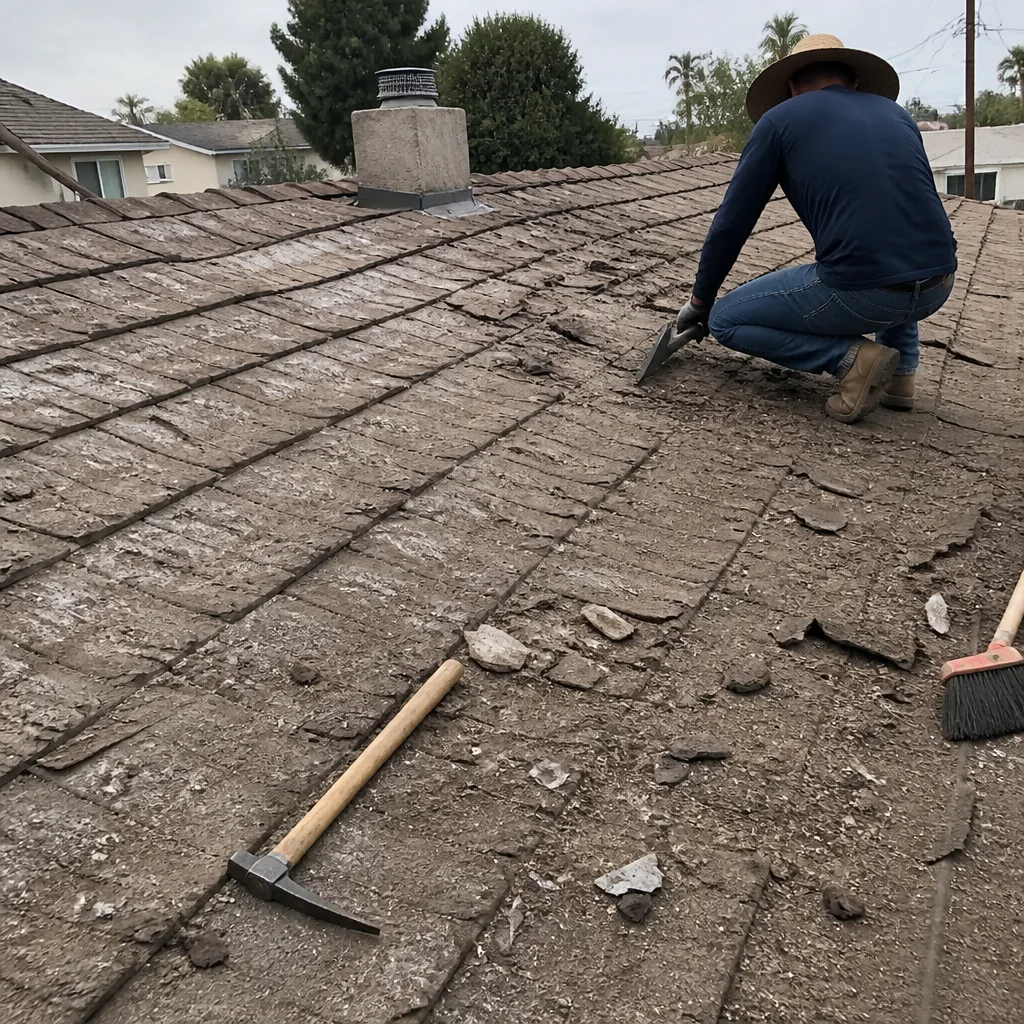 Before
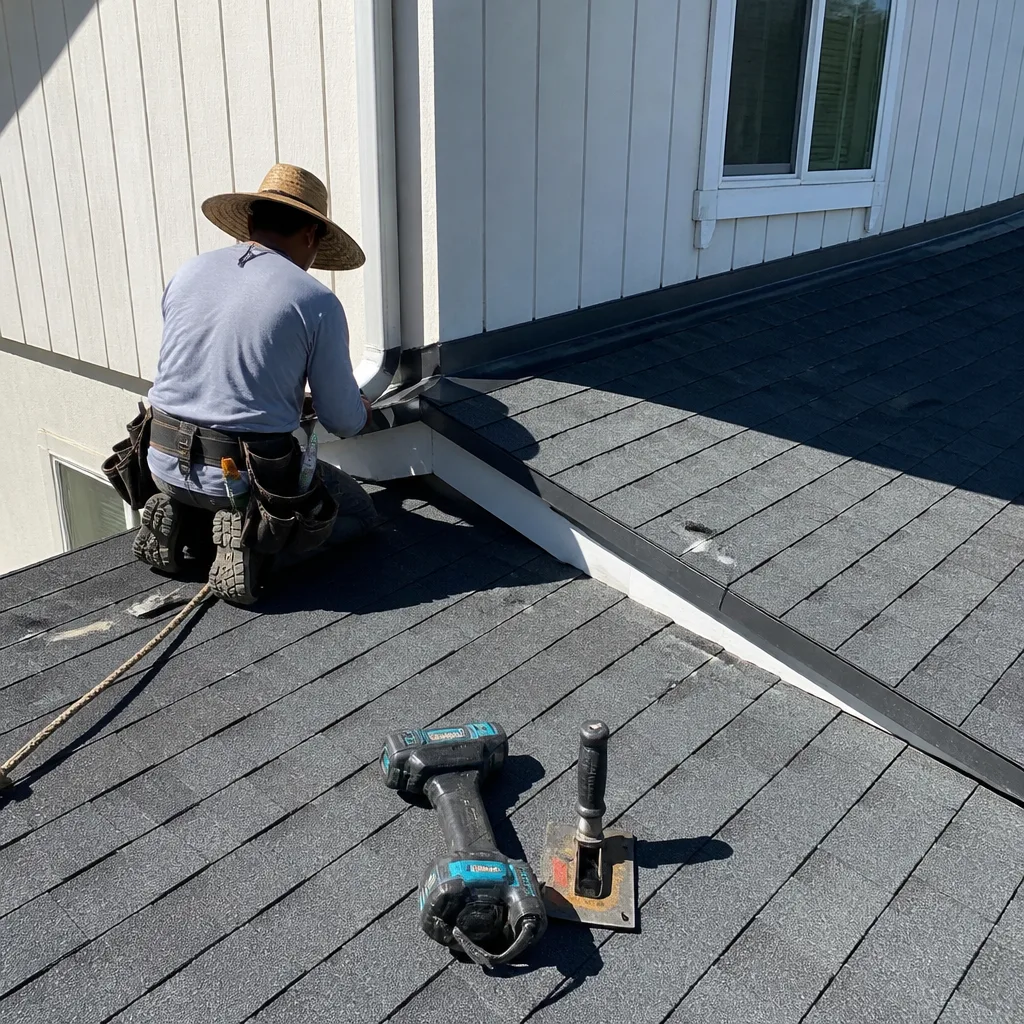 After
 Before
 After