
Last updated October 31, 2026
 Architectural shingles
 Metal roofing
 Tile roofing
 GAF
 Owens Corning
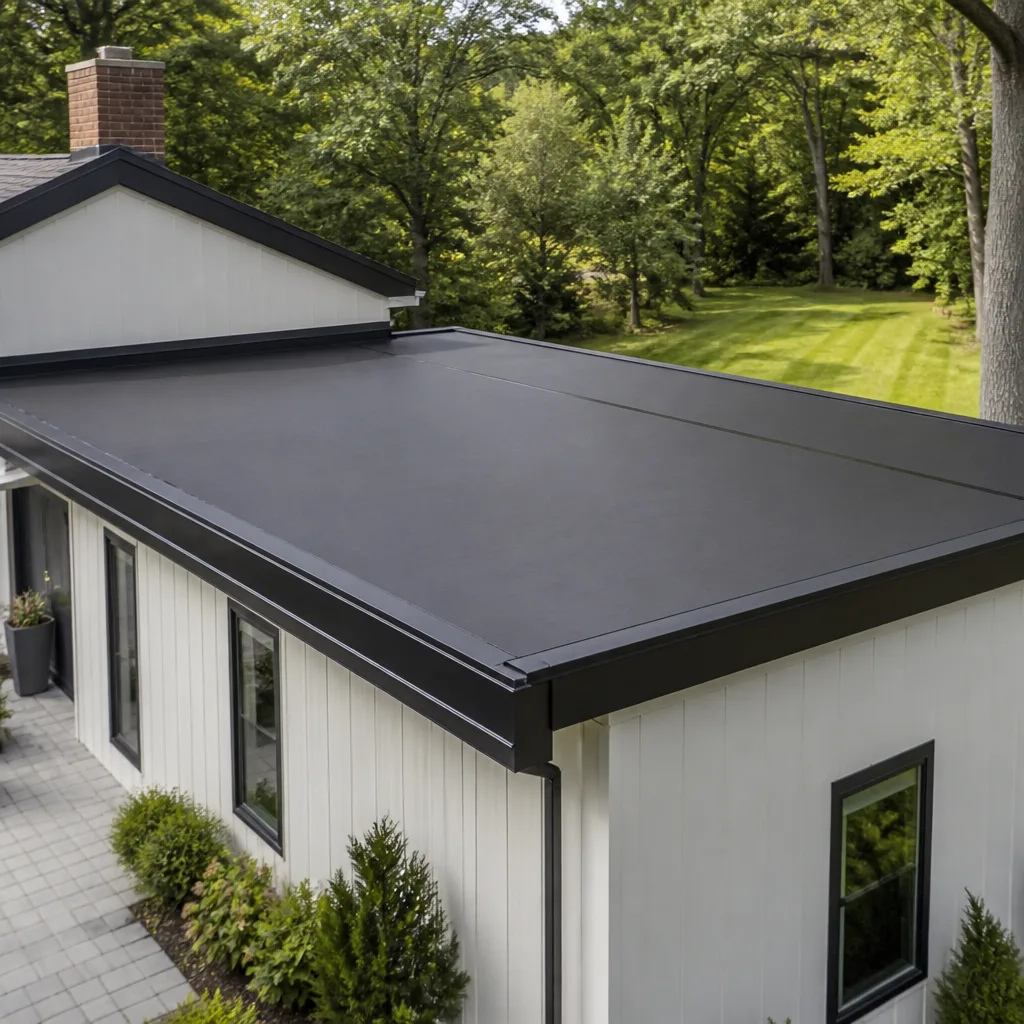 Flat & low-slope
Free roof inspection with deck photos before we talk money - GAF and Owens Corning certified installation
Roof Repair Maintenance Checklist for La Habra Homeowners
Here’s a stat that surprises most La Habra homeowners: the most common roof failure we see after Santa Ana season isn’t from wind tearing shingles off. It’s from mortar quietly crumbling out of hip caps and ridge lines on Spanish tile roofs, then the first real rain of winter finds its way underneath. Most maintenance checklists floating around online were written for Minnesota or Ohio, where ice dams and snow load dominate the conversation. That advice doesn’t transfer to a climate where July heat bakes tile underlayment at 140 degrees and October winds push dry air through every hairline crack. This guide is written specifically for La Habra: the tile roofs, the composition roofs, the Santa Ana cycle, and the marine layer weeks that hide slow leaks until they become ceiling stains.
Quick Answer
The essential roof maintenance checklist for La Habra homeowners follows three seasons, not four: pre-Santa Ana prep (September – October), post-Santa Ana assessment (November – December), and marine layer moisture checks (May – July). The highest-priority tasks are inspecting hip caps and ridge mortar on tile roofs, clearing debris from valleys and scuppers, checking flashing around penetrations, and confirming underlayment isn’t exposed anywhere. Most homeowners can handle about a third of this from ground level with binoculars; the rest requires a professional because the risk of walking a tile roof wrong is a cracked tile for every step you take.
Key Takeaways:
- La Habra’s roof maintenance calendar runs on heat, wind, and coastal moisture patterns, not traditional four-season logic.
- Tile roof failure in this city almost always starts at mortar joints: hip caps, ridge lines, and gable ends.
- Santa Ana winds are the single biggest annual stressor on La Habra roofs, and post-Santa Ana checks catch problems before rain does.
- Several maintenance tasks are mandatory to keep manufacturer warranties valid on GAF, IKO, Atlas, and other major brands.
- Ground-level inspection with binoculars is safe and effective for spotting about 60% of early warning signs.
- Walking a tile roof without proper training causes more damage than the problems you’re trying to find.
Styles & brands we work with
Table of Contents
- Why La Habra’s Climate Demands a Different Maintenance Schedule
- Pre-Santa Ana Checklist: September Through October
- Post-Santa Ana Assessment: November Through December
- Marine Layer Period: The Hidden Moisture Months
- Tile Roof Specifics: Hip Caps, Ridge Mortar, and Underlayment
- Flat and Low-Slope Sections: What La Habra Homes with Additions Need
- Warranty-Voiding Maintenance Gaps Most Homeowners Don’t Know About
- How to Self-Inspect Safely From Ground Level
Why La Habra’s Climate Demands a Different Maintenance Schedule
La Habra sits in a strange pocket of Southern California weather. We’re far enough inland that we get real heat in the summer: weeks of 90-plus degree days that bake roofing materials relentlessly. But we’re close enough to the coast that the marine layer rolls in most late-spring mornings, bringing moisture that sits on roofs overnight. Then every fall, the Santa Ana pattern flips the script: hot, dry air moving at 40 to 60 miles per hour, sometimes gusting harder through the canyons, stripping moisture from every material it touches. That three-part cycle, heat, coastal damp, and desert wind, is what actually drives roof maintenance in this city.
Most generic roofing checklists say things like “inspect your gutters each spring” and “watch for ice dams in winter.” Neither matters much here. What matters in La Habra is the cumulative effect of thermal expansion on tile and composition roofs. Roof surfaces here regularly swing 50 to 70 degrees between midday and midnight during summer. That movement loosens nails, cracks mortar, and eventually opens seams. It’s not dramatic; it’s incremental. And it’s exactly why maintenance timing should follow our actual weather patterns rather than a New England calendar.
The Three La Habra Roof Seasons
- Pre-Santa Ana (September – October): Preparation window. The roof gets inspected, minor cracks get sealed, loose tiles get reset, and debris gets cleared before wind season turns small problems into big ones.
- Post-Santa Ana (November – December): Damage assessment. After winds die down, the roof needs a careful check for shifted tiles, broken hip caps, exposed underlayment, and debris that’s now wedged into valleys.
- Marine Layer Period (May – July): Moisture check. Morning overcast and coastal humidity reveal slow leaks and trapped moisture that dry months hide. This is when we spot early signs of rot, mold, and delamination on composition shingles.
If you’re only scheduling one roof inspection per year, make it a post-Santa Ana check. That’s when La Habra roofs show the most actionable damage: the wind season is over, the rain hasn’t started yet, and there’s still time to fix things before winter storms arrive. But homeowners who run all three seasonal checks catch problems months earlier and pay meaningfully less for repairs. In our experience, a $200 mortar touch-up in November is the difference between a roof that lasts another 15 years and one that needs underlayment work by March.
If you want a professional Roof Inspection in La Habra, we walk every section and document findings with photos. But the checklist below is designed so you can do meaningful maintenance work yourself, safely, between professional assessments.
Pre-Santa Ana Checklist: September Through October
The goal of the pre-Santa Ana pass is simple: make sure nothing on your roof is loose, cracked, or brittle before 60-mile-per-hour wind hits it. Loose materials don’t just fly off during Santa Anas; they become projectiles that damage neighboring sections. A single loose clay tile can break three more tiles on its way across the roof surface. Here’s the exact order we recommend, from most urgent to least:
- Clear all valleys and scuppers of leaves and twigs. La Habra’s mature trees drop a lot of debris between August and October. If valleys are obstructed when rain eventually comes, water backs up and finds the path of least resistance, which is usually under the tiles.
- Inspect all hip caps and ridge lines for cracked or shifted mortar. This is the number-one pre-Santa Ana task for tile roofs. Mortar joints crack from thermal cycling, and wind exploits those cracks to lift and shift the caps. Any cap that moves by hand pressure is a water entry point.
- Check flashing around chimneys, vents, and skylights. Flashing is just thin metal, and 10-plus years of Santa Ana seasons can loosen it. Look for gaps where flashing meets the roof surface and where it meets the vertical surface of the penetration.
- Secure or remove anything sitting on the roof. Satellite dishes bolted to old mounts, solar panels with loose wiring, decorative items: if it’s not tight, the wind will find it. Loose things on a roof damage other roof components when they move.
- Trim overhanging branches back at least 3 feet from the roof line. During wind, branches that touch the roof constantly scrape the surface. On tile roofs this means scratched or cracked tiles; on composition roofs it means lost granule coverage and exposed asphalt.
- Clear gutters and downspouts lightly. Yes, gutter cleaning matters less in La Habra than in leaf-heavy climates, but it still matters. Focus on the areas where your house sits under trees. Water that overflows clogged gutters runs down fascia and can rot the eave line over time.
A caution on item 2 before you try it: walking a tile roof incorrectly concentrates your body weight on two or three tiles at a time, and cracked tile is the typical result. If you can inspect hip caps from ground level with binoculars, do that. If you need to be on the roof to confirm what you’re seeing, call a professional for roof repair in La Habra rather than damaging tiles on the way up. The repair bill for a cracked tile is more than the inspection cost every time.
Post-Santa Ana Assessment: November Through December
Santa Ana winds in La Habra commonly gust between 40 and 70 miles per hour, and stronger events hit every few years. After each wind season, the roof needs a deliberate once-over, even if nothing looks wrong from the street. Wind damage is sneaky: it rarely announces itself with a visible hole. Instead, it partially dislodges a tile, lifts a shingle tab, or bends a piece of flashing just enough that water can get in during the next real rain. If you skip the post-Santa Ana check, the first sign of trouble is often a water stain on a bedroom ceiling in February.
Walk through this sequence, ideally in the week or two after the last significant wind event of the season:
- Look for tiles or shingles on the ground around your home’s perimeter. This is the most direct signal of wind damage. Falls are more common on tile roofs but happen on composition roofs too. If you find material on the ground, there’s exposed underlayment up top.
- Scan ridge lines from the yard with binoculars. Santa Anas work on ridge caps relentlessly, especially on north-south oriented rooflines that take wind broadside. Look for caps that appear lifted, shifted, or missing entirely.
- Check all roof valleys carefully. Wind funnels debris into valleys, and that debris holds moisture against the roof surface for months. Also look for leaves wedged under tile edges; that’s a sign the tile is loose enough to admit debris, which means water can follow.
- Inspect composition shingles for lifted or folded tabs. On asphalt shingle roofs, wind works on the leading edge of each tab. If tabs are standing up, the adhesive seal is broken and the shingle won’t survive the next wind event.
- Look at flashing around all penetrations. Chimneys are most vulnerable because they’re tall and catch wind from every direction. But vents, furnace flues, and plumbing stacks get worked too. Any visible gap, even paper-thin, is a leak waiting for rain.
- Check the eave line and fascia for shifted metal. Drip edge and fascia metal take wind gusts directly. Bent or pulled-away metal lets water wick up into the roof deck.
If the post-Santa Ana check reveals more than two or three minor issues, we recommend a full professional inspection. Damage tends to cluster; where one tile failed, others are usually close behind. And for homeowners considering a bigger roofing investment, this is also the right season to evaluate whether repairs are enough or whether the system is approaching end of life. Our Roof Replacement in La Habra guide covers that decision in detail.
Marine Layer Period: The Hidden Moisture Months
Between May and July, La Habra mornings are often gray and damp. The marine layer pushes inland, temperatures drop overnight, and then the sun burns through by mid-morning. That daily condensation cycle does something specific to roofs: it exposes leaks that dry weather hides. Water that entered the roof system months ago, during winter storms, lingers in the decking or underlayment. When the marine layer arrives and humidity spikes, that trapped moisture becomes visible in specific ways.
During this period, check for these signs each week or every other week:
- Dark or discolored patches on interior ceilings, especially near the perimeter of rooms or under valleys. Trapped moisture in the roof system wicks down and shows up as shadowing even when the roof isn’t actively leaking.
- Musty or damp smells in the attic after a run of marine layer mornings. If your attic smells like wet plywood, that’s what it is. The source is almost always a roof leak, even if you can’t see water.
- Mold or mildew on the underside of roof sheathing. Catch this early and the repair is often just fixing a small flashing gap. Wait, and the sheathing rots and you’re paying for decking replacement, which adds thousands.
- Rust or corrosion on exposed flashing. Marine layer moisture accelerates oxidation, especially on older galvanized flashing. If you see rust streaks, the metal is thinning and will eventually fail at the seam.
- Granules washing down from composition shingles after light morning drizzle. Some granule loss is normal over years, but a sudden increase during marine layer months suggests the shingles’ weatherproofing layer is reaching the end of its useful life.
One of the most common things we hear from La Habra homeowners: “We didn’t see a leak until June, so we thought the roof was fine.” By June, a leak that started in January has had months to saturate decking and insulation. Marine layer season is the right time to confirm the roof system is actually dry inside, not just dry on the surface. If any of the signs above appear, get an assessment before the next winter rain cycle. Dauntless Roof Repair home covers our full inspection-to-repair process.
Tile Roof Specifics: Hip Caps, Ridge Mortar, and Underlayment
Spanish tile roofs are common throughout La Habra, and they don’t fail the way most people assume. The tiles themselves almost never break down; fired clay and concrete tile routinely last 50, 75, even 100 years. What fails is everything around and underneath the tile: the mortar holding hip caps and ridge lines, the underlayment that does the actual waterproofing, and the flashing at penetrations. If you own a tile roof in this city, this section is your maintenance home base.
Hip Caps and Ridge Lines
Hip caps are the curved tiles that sit on the angled intersections where two roof slopes meet. Ridge lines run along the peak. Both are bedded in mortar in traditional installations. La Habra’s summer heat expands the tiles, winter cool contracts them, and years of that cycling weaken the mortar bond. When the Santa Anas arrive, compromised mortar joints let the wind get under the caps and work them loose. The first heavy rain then finds the gap where the cap used to sit and runs water directly into the roof structure.
Check hip caps and ridge lines twice a year minimum: once in September before wind season and once in December after winds subside. Look for three things from ground level with binoculars: missing caps, obviously shifted or lifted caps, and cracking or crumbling mortar visible at the joint lines. If mortar debris is accumulating in your gutters or on the ground below roof edges, that’s a clear signal the joints are failing, and it’s time to call a roofer who handles tile repair. Many roofing companies in the area push full replacement when they see tile issues; we’d rather repair the mortar and reset the caps when the underlying structure is sound. Tile that’s intact doesn’t need replacing.
Underlayment Exposure
Underlayment is the waterproof layer under your tiles. Tile itself isn’t waterproof: it sheds most water but not all, and the underlayment is the system that actually keeps your house dry. Underlayment lasts 20 to 30 years in La Habra’s climate; many tile roofs in the city are sitting on original underlayment approaching or past that lifespan.
The danger sign we look for is exposure. If a tile has slipped, cracked, or broken off entirely, and you can see what looks like paper or fabric or black sheeting underneath, water is now hitting your waterproofing layer directly. A few months of exposure isn’t an emergency. A full wet season is a different story. Underlayment degrades rapidly when exposed to UV and direct water, and by the time you see interior stains, the damage is often extensive. The fix is re-setting tiles or, on older roofs with widespread underlayment deterioration, a full underlayment replacement – which is essentially a re-roof under a new or salvaged tile system. That’s a replacement-level job, and it’s worth understanding before you need it. For homeowners weighing repair versus replacement, our roof replacement guide for La Habra breaks down the cost and timing factors.
Manufacturers like Atlas and Boral make underlayment products designed specifically for tile applications in hot, dry climates. The product choice matters less than the installation: seams need proper overlap, penetrations need proper flashing, and fasteners need to be the right material for the underlayment type. When we evaluate tile roofs, underlayment condition is the first thing we check, because it dictates everything else.
Flat and Low-Slope Sections: What La Habra Homes with Additions Need
A significant number of La Habra homes have flat or low-slope roof sections, often on room additions, patios, carports, or mid-century flat-roof designs. These sections behave completely differently from pitched tile or composition roofs, and they show up in maintenance checklists less often than they should.
Flat roofs drain slowly compared to pitched roofs, which means water sits on the surface longer after rain. In La Habra’s dry climate, that’s less of a problem than it would be in the Pacific Northwest, but it still means flat sections wear through faster than their neighbors, especially at seams, drains, and flashing transitions. The most common materials on La Habra flat sections are modified bitumen, built-up roofing, and increasingly single-ply membranes, each with its own failure patterns.
Maintenance checklist for flat and low-slope sections:
- Clear debris after every wind event. Flat roofs catch everything the Santa Anas blow around. Leaves, twigs, and dirt sit in piles, hold moisture against the roof surface, and accelerate wear at the pile centers.
- Check drains and scuppers monthly during the rainy season. A single clogged drain on a flat section can leave standing water that eventually finds a seam or crack. In La Habra, the danger is concentrated in the few real rain weeks we get; drains need to work perfectly during those weeks.
- Look for cracks or splits at seams and flashings. Modified bitumen and built-up roofs fail at the seams first. Any visible crack that runs perpendicular to the seam is an active leak site, even if it’s not leaking yet.
- Watch for blistering or bubbling. Bubbles on a flat roof surface mean moisture is trapped between layers and vapor pressure is lifting the membrane. This is a common failure on older flat roofs in hot climates; La Habra’s summer heat accelerates the process.
- Confirm the transition between flat and pitched sections is sealed. Where a flat addition meets a pitched main roof, the transition flashing is the single most common leak point on the entire house. It’s also one of the least-checked spots on any roof.
Flat roof repair is often cheaper than people assume when the damage is caught early: a seam repair or small patch versus a full membrane replacement. But caught late, when water has saturated the insulation and decking, the repair scope balloons. If you own flat sections and haven’t had them looked at in a few years, put it on your list for the next dry stretch.
Warranty-Voiding Maintenance Gaps Most Homeowners Don’t Know About
Here’s something that gets missed on most maintenance checklists: several very common maintenance gaps void manufacturer warranties on the roofing products you already paid for. Homeowners assume a 30-year or 50-year warranty is a passive guarantee. It’s not. It’s a contract with conditions, and the conditions include maintenance. If you don’t meet them, the warranty can be reduced or voided entirely.
These are the most common warranty-voiding gaps we see on La Habra roofs when we’re called in for repair evaluations:
- Letting debris accumulate in valleys or on flat sections. Manufacturer warranties typically require that the roof be kept free of debris that holds moisture. A valley full of wet leaves is a warranty problem if you later file a claim for water damage in that area.
- Skipping documented inspections. Some extended warranties, particularly manufacturer-backed labor warranties, require periodic professional inspections and maintenance records. If you can’t show records, the claim gets denied.
- Ignoring missing or damaged flashing. Flashing failures are explicitly excluded from most shingle and tile warranties when the homeowner was aware of the damage and didn’t remediate it. Once you see a flashing gap, the clock is running.
- Walking on the roof improperly. Tile warranties from brands like IKO and Tamko explicitly exclude broken tiles caused by foot traffic. If you climb up there and crack tiles, the manufacturer won’t cover the damage.
- Using improper cleaning methods. Pressure washing composition shingles strips granules and voids most manufacturer warranties; only walk-behind cleaning with appropriate solutions is generally acceptable. Tile roofs can be pressure washed, but technique matters: too much pressure damages the tile surface and weakens mortar.
There’s a theme here: warranties cover manufacturing defects, not neglect. And La Habra’s climate creates the specific conditions that make neglect expensive. Heat and wind and coastal moisture don’t create problems overnight; they create the conditions where small maintenance gaps become big material failures. The maintenance checklist above isn’t just a good idea; it’s the difference between a warranty that pays when something goes wrong and a warranty that’s been quietly invalidated by deferred maintenance.
How to Self-Inspect Safely From Ground Level
You don’t need to climb on your roof to maintain it. In fact, the safest and most useful maintenance work happens from the ground with a good pair of binoculars and a systematic walk around the property. Ground-level inspection has limits, and we’ll get to those, but it can catch most of the early warning signs that matter before they become leaks.
Here’s a ground-level inspection routine designed for La Habra’s roof types and common lot sizes. You can complete the full pass in under an hour, and it should be done at least three times a year: pre-Santa Ana, post-Santa Ana, and mid-marine-layer season.
- Start at the front left corner of the house and move clockwise. Consistency matters because it builds a visual baseline. Each time you inspect, you’re comparing against what you remember from the last pass.
- Use binoculars or a decent camera zoom. The standard 7x or 8x magnification in most binoculars is enough to see cracks in mortar, lifted shingle tabs, and flaws in flashing from ground level. Your phone camera at max zoom is a passable substitute if you stabilize your hands against a fence or wall.
- Look at each roof slope from two angles. Walk one full circuit looking at the roof from directly below and slightly off to one side. The second angle catches things the first position hides, especially on tile where the curved profile creates shadows.
- Focus on transitions first. The places where the roof changes plane, valley lines, hip lines, eave edges, and the spots where anything penetrates the surface, are statistically where failure occurs. Spend most of your inspection time there.
- Take photos of anything questionable. Even if you’re not sure whether something is a problem, photograph it. Over a few inspection cycles, your photo library tells you whether a crack is growing, whether a tile shifted further, whether a rust spot is spreading. That trend data is exactly what we look at during professional assessments.
- Go inside last. After the exterior pass, check attic spaces for water staining, damp insulation, or visible light coming through the roof deck. Visible light means a penetration that water will find eventually.
What ground-level inspection cannot catch: the condition of underlayment under installed tile, the integrity of flashing that’s partially embedded in roofing material, the structural soundness of decking, and whether a roof valley is draining correctly, even though it looks clean. Those require getting on the roof or in the attic to assess properly. If your ground-level inspection turns up anything concerning, or if you simply haven’t had a professional look at the roof in a few years, our roof inspection service in La Habra covers the full picture.
Common Mistakes to Avoid
- Skipping the post-Santa Ana check because the roof “looked fine” from the street. Wind damage on tile roofs is rarely visible from street level. Most broken hip caps and slipped tiles only show from ground inspection directly beneath the damaged section, or from the roof itself.
- Treating all roofing materials as interchangeable when doing maintenance. A sealant that’s right for composition shingles can damage tile surfaces or create chemical reactions with metal flashing. Use materials specified for your roof type, or ask a roofer what to buy.
- Walking on tile roofs the wrong way. Weight should distribute along the lower third of each tile, stepping only where tiles overlap so support runs underneath. Every off-placement step risks a cracked tile, and the damage is usually not visible until it leaks.
- Fixing visible mortar cracks with hardware store concrete patch instead of roofing-grade mortar. Standard concrete mix is too rigid for thermal cycling. When temperatures swing, rigid patches crack again quickly, and you’ve spent money to buy a few months.
- Leaving vegetation overhanging the roof line. During Santa Anas, branches scrape roofs continuously for hours. On composition shingles that strips granules; on tile it creates hairline fractures. Regular trimming back from the roof is a maintenance item, not landscaping preference.
- Waiting for a leak before taking any of this seriously. By the time water shows up in the living space, you’ve often gone past repair-level fixes into structural remediation: decking replacement, insulation replacement, sometimes drywall and paint. Roof maintenance is dramatically cheaper than water damage repair.
- Assuming a new roof means no maintenance for 20 years. Even brand-new roofs need post-wind checks and seasonal debris clearing. Warranties assume ongoing maintenance regardless of roof age, and the first few years are when installation issues show up; early detection keeps warranty remedies simple.
See the difference
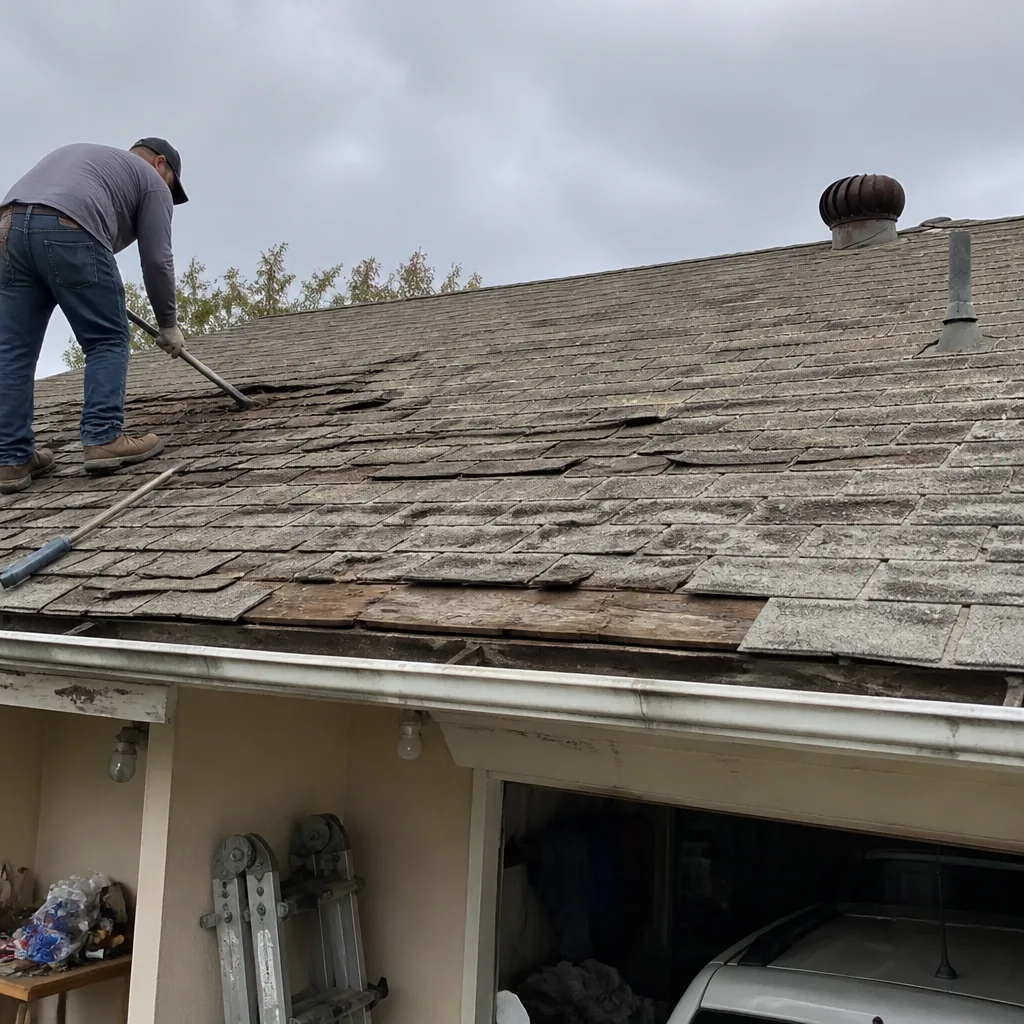 Before
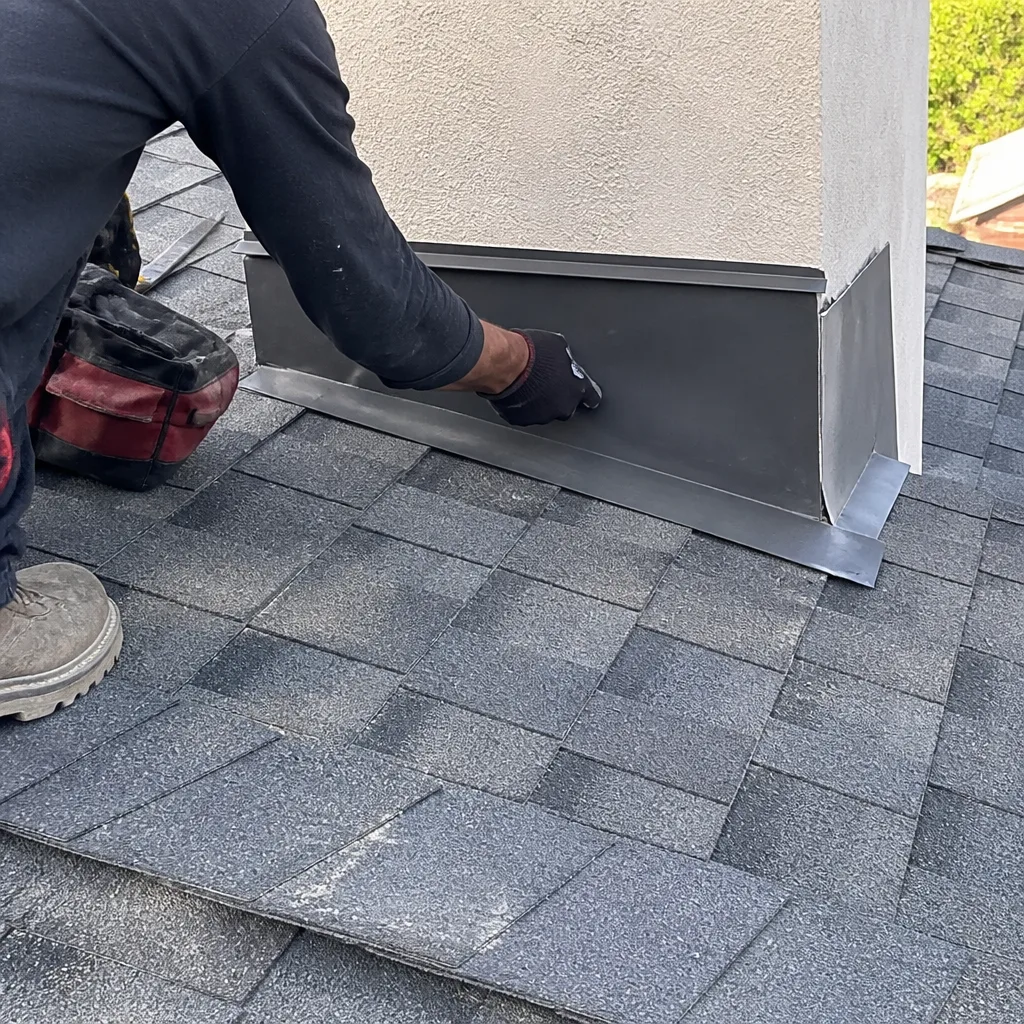 After
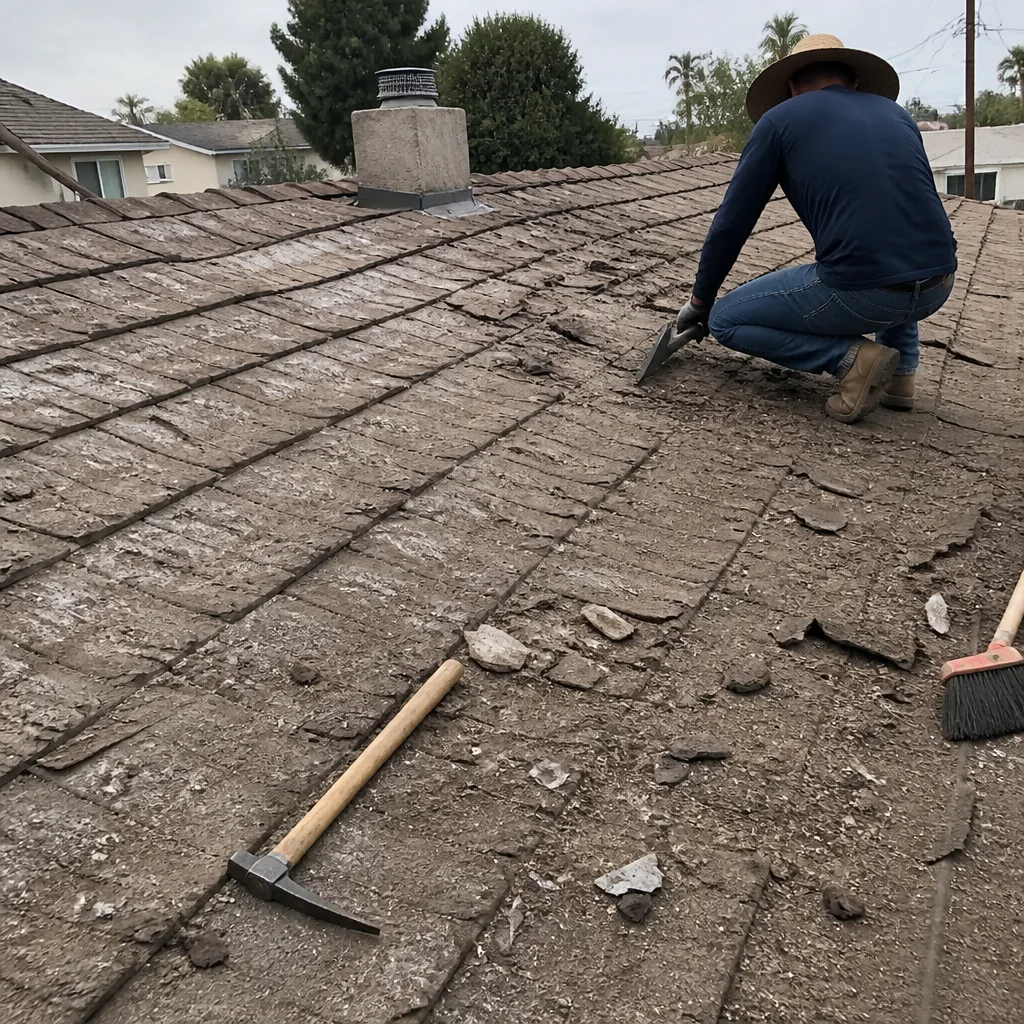 Before
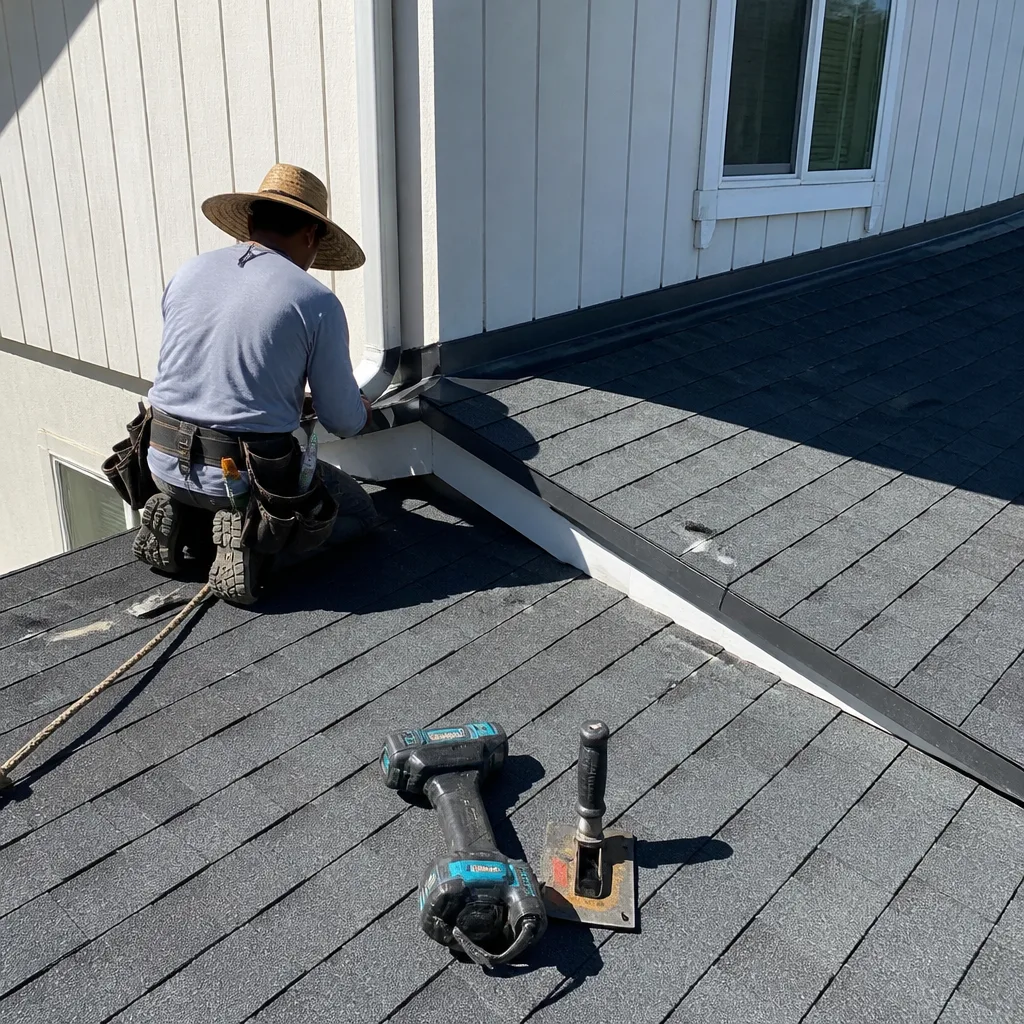 After
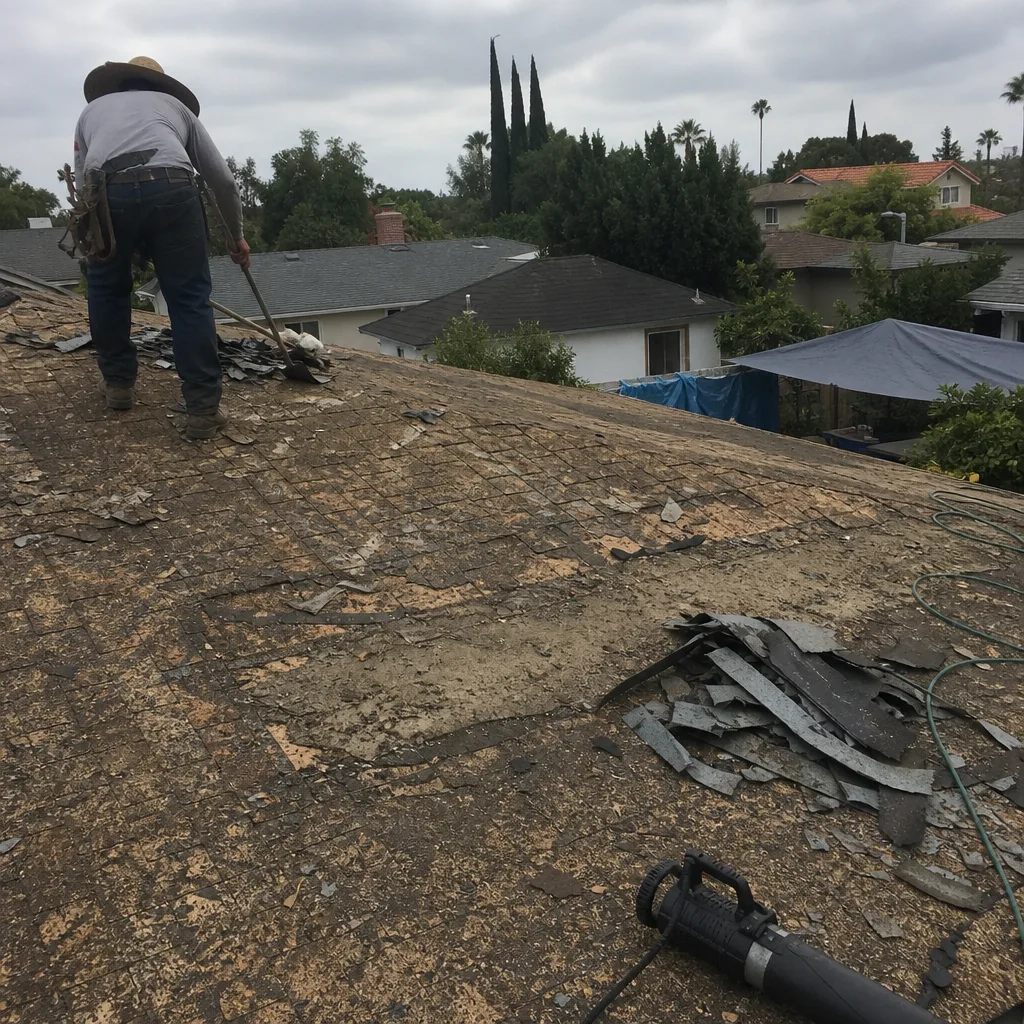 Before
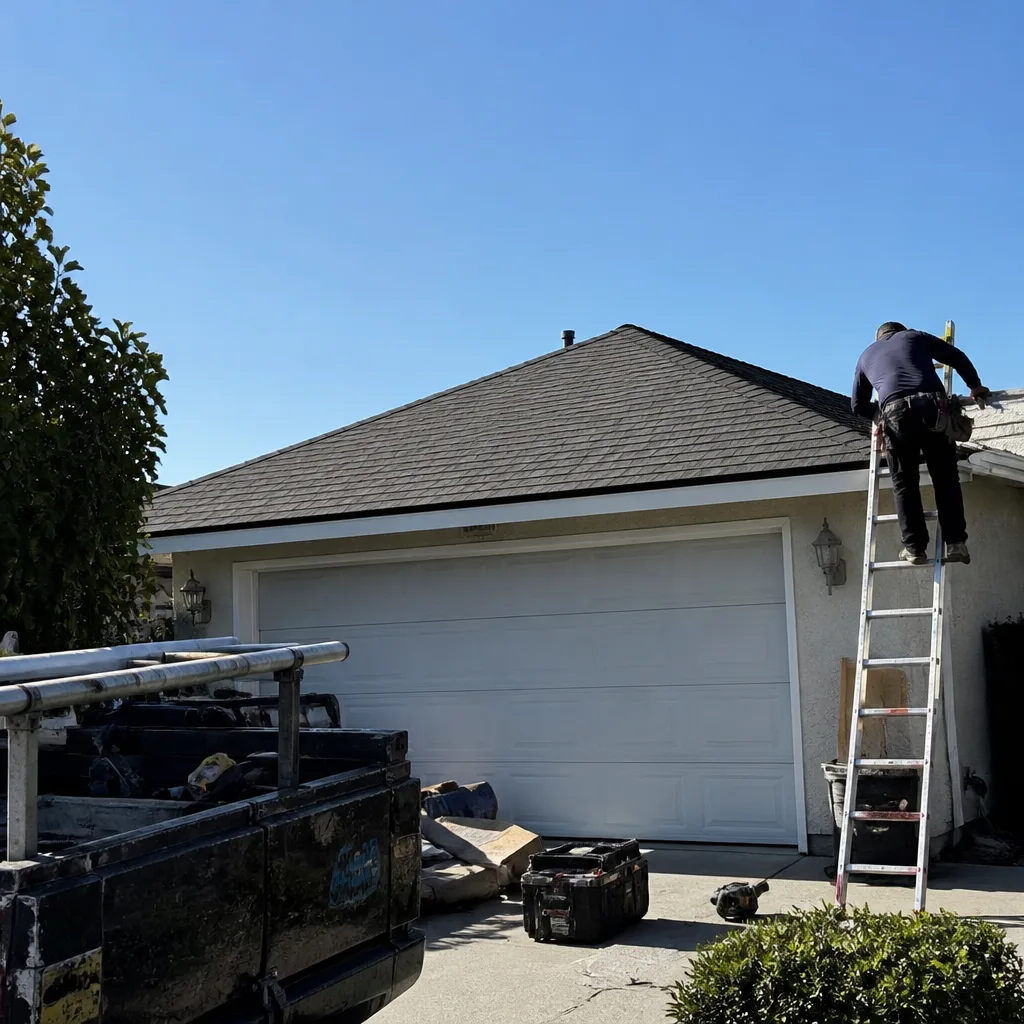 After
When to Call a Professional
Some maintenance items genuinely require a roofer’s assessment, and the list is longer than most homeowners expect. Call a professional when you see any of these: visible underlayment anywhere on a tile roof, two or more loose or missing hip caps after a wind event, water staining inside the attic or home, repeated granule loss on composition shingles, standing water on flat sections that doesn’t drain, or any crack in flashing you can see from the ground. Also call if your roof is older than 20 years and hasn’t had a professional inspection in over three years; the inspection is cheaper than the problems it catches. Dauntless Roof Repair offers free estimates in La Habra. Call (844) 750-0317 and we’ll tell you exactly what your roof needs, and exactly what it doesn’t.
Frequently Asked Questions
Three times a year minimum: once in September before Santa Ana season starts, once in November or December after winds subside, and once in May or June when marine layer moisture reveals leaks that dry weather hides. If your roof is over 15 years old, add a professional inspection every other year. Call (844) 750-0317 to schedule a roof inspection in La Habra.
Crumbling mortar in hip caps and ridge lines on Spanish tile roofs, accelerated by the city’s summer heat cycling and Santa Ana winds. The tiles themselves last for decades, but the mortar that holds them fails quietly, and most homeowners don’t notice until rain gets in. If you see mortar dust in your gutters, it’s time for an assessment.
Heat causes more cumulative damage; rain causes more acute damage. La Habra’s high summer temperatures stress roofing materials through thermal expansion day after day, which is what eventually weakens mortar, adhesive seals, and flashing. Rain then exploits those weaknesses when storms arrive. Managing heat stress through regular maintenance is the preventive strategy that works here.
For most single-family homes, basic annual maintenance such as clearing debris, resealing small flashing gaps, and touching up mortar runs $200 to $600 per year when done proactively on a repair-level basis. Catching problems early keeps you in repair territory; ignoring them for years pushes you toward replacement-level work. Call (844) 750-0317 for an exact quote on your specific roof.
We recommend against it. Walking tile roofs without proper training cracks tiles, and every crack you create becomes a future leak. Ground-level inspection with binoculars catches most early warning signs safely, and professional inspections handle the rest. If you do need something repaired, call us first; the assessment is free and comes with no obligation.
Replacement is the right call when the underlayment is failing on a tile roof, when composition shingles are losing granules across wide areas, or when flashing and decking damage extend beyond the point where repairs hold up cost-effectively. For a detailed breakdown of timing and costs, see our Roof Replacement in La Habra guide. We’ll give you an honest recommendation either way.
The Bottom Line
La Habra’s roof maintenance calendar follows heat, wind, and coastal moisture, not the four seasons. The highest-value tasks are checking hip caps and ridge mortar before and after Santa Ana season, keeping valleys and drains clear, and using marine layer months to catch moisture problems early. Most homeowners can handle safety checks from ground level with binoculars, but some assessments genuinely require a professional, especially anything involving tile underlayment or flashing embedded in the roof system. Manufacturer warranties assume you’re doing this work; skip it and you’re paying for future problems twice: once in the maintenance you didn’t do, and again in the warranty that won’t cover the result. If you want a professional opinion on your roof’s condition, Dauntless Roof Repair serves La Habra with free estimates and honest recommendations. Call (844) 750-0317 to schedule yours.
Written by the team at Dauntless Roof Repair, serving La Habra since 2017.